
Radiofrequency Ablation
Procedures
- Bursa Injections
- Dorsal Root Ganglion (DRG) Stimulation
- Epidural Steroid Injection
- Facet Injections
- Gel Knee Injections
- Joint Injections
- Kyphoplasty
- Medial Branch Nerve Block
- Peripheral Nerve Block
- Radiofrequency Ablation
- Sacroiliac SI Joint Injection
- Spinal Cord Stimulator
- Sympathetic Nerve Block
- Trigeminal Nerve Block
- Trigger Point Injections
Minimally Invasive Pain Management
Radiofrequency ablation (RFA) is a minimally invasive pain management technique in which targeted nerves are heated with radiofrequency energy to disrupt pain signals—providing significant relief for chronic back, neck, and joint pain. At Holistiq Spine & Orthopaedic, RFA forms a vital part of a multidisciplinary approach, pairing advanced interventional procedures with holistic care for optimal, long-lasting results.
What Is Radiofrequency Ablation?

Radiofrequency ablation uses radio waves to generate controlled heat around sensory nerves responsible for transmitting pain, effectively “turning off” the pain signals these nerves send to the brain. RFA is most often used to treat pain from the spine’s facet joints, sacroiliac joints, and occasionally peripheral (non-spinal) joints.
What Does It Treat?
- Chronic low back and neck pain from facet joint syndrome
- Sacroiliac joint pain
- Arthritic joint pain in the trunk or limbs
- Pain due to spondylosis, degenerative disc disease, or whiplash injuries
- Other symptoms treated include persistent aching, sharp, or referred pain to the buttocks, thighs, or shoulders, often not relieved by medication or physical therapy
Who Is a Good Candidate for Radiofrequency Ablation?
- Patients who experienced significant relief from diagnostic medial branch or lateral branch nerve blocks
- Individuals with spine or joint pain not effectively managed by conservative therapies
- Patients seeking nonsurgical, long-term pain relief with a low complication rate.
Clinical Research Data
- RFA provides 6–24 months of continuous pain relief in most patients—with 70–80% reporting significant improvement in function and quality of life.
- Clinical studies demonstrate reduced need for opioid medications, enhanced mobility, and greater participation in rehabilitation after successful RFA.
- Complication rates are very low, and re-treatment is possible if pain returns.
What to Expect
Before, During and After the Procedure
- Before: Comprehensive clinical assessment, including review of imaging and results of nerve blocks. Blood thinners may be paused as advised.
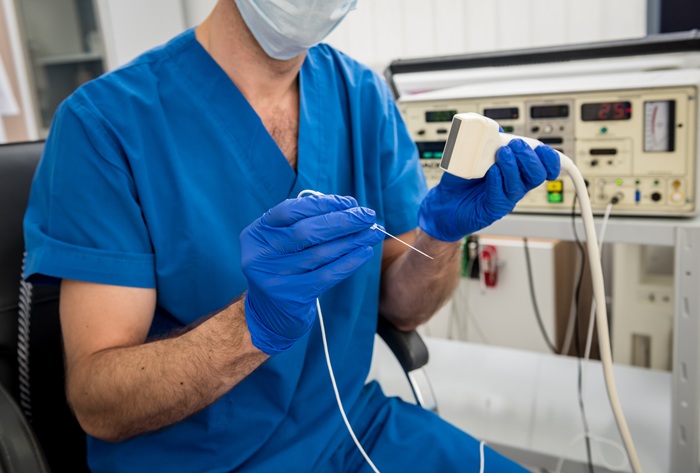
- During: Procedure lasts 30–90 minutes. Local anesthesia is used; under X-ray or ultrasound guidance, a specialized needle is placed beside the target nerve. A microelectrode delivers radiofrequency current, heating and disabling the nerve’s pain-transmitting ability. Most patients remain awake with mild sedation if needed.
- After: Most go home the same day; mild soreness or sunburn-like discomfort is possible. Improved pain relief develops gradually over days to weeks. Full activity is typically resumed within 24–48 hours.
Outcomes
- Long-lasting, targeted pain relief for 6–24 months.
- Reduced pain medication use and improved function.
- Enhanced ability to participate in holistic rehabilitation and daily life.
- Safe, repeatable, and minimally invasive.
Complementary Treatments
- Medial/lateral branch nerve blocks (diagnostic or therapeutic)
- Epidural injections, physical therapy, chiropractic care, medication management, and acupuncture
- Holistic interventions at Holistiq maximize outcomes: movement rehabilitation, anti-inflammatory nutrition, and integrative brain-body strategies.
Non-Surgical Care Options
Anti-Inflammatory Nutrition
Registered dietitians provide guidance and supplement plans for reducing system-wide inflammation to support recovery.
Shockwave Therapy
Noninvasive therapy accelerates healing in adjacent soft tissues and may further reduce pain alongside RFA.
Peripheral Magnetic Stimulation (PMS)
Used to modulate nerves and musculature after ablation for enhanced functional recovery.
Chiropractic & Manual Therapy
Restores spinal motion and addresses muscular imbalances after pain has been reduced by RFA.
Image-Guided Injections (Case-Dependent)
- PRP or stem cell injections for regenerative disc therapy
- Lumbar epidural steroid injections
- Facet or medial branch blocks
Brain and Body Optimization
Programs utilize mindfulness, neurocognitive exercises, and counseling to boost pain tolerance and improve quality of life.
Movement Restoration and Rehabilitation
Physical therapy focuses on building strength, flexibility, and function—crucial after pain relief from RFA.
FAQs About Peripheral Nerve Blocks
What is radiofrequency ablation (RFA)?
Radiofrequency ablation is a minimally invasive procedure that uses heat generated by radio waves to disrupt nerve function, preventing pain signals from reaching the brain. It’s often used to treat chronic back, neck, knee, or joint pain.
How long does pain relief from RFA last?
Pain relief usually lasts 6–12 months, but in some patients it can extend up to 2 years. Eventually, the treated nerves may regenerate, and the procedure may need to be repeated.
Is radiofrequency ablation safe?
Yes, RFA is considered safe when performed by trained specialists. Risks include infection, bleeding, localized discomfort, nerve injury, or numbness. Serious complications are rare.
Who is a candidate for radiofrequency ablation?
Ideal candidates are patients with chronic pain who have responded well to diagnostic nerve blocks. RFA is often used for arthritis-related pain, facet joint pain, sacroiliac joint pain, and some nerve-related conditions.
What is recovery like after radiofrequency ablation?
Recovery is generally quick. Patients may experience mild soreness for a few days, but most return to normal activities within 24–72 hours. Pain relief may begin immediately or take up to 2–3 weeks.
What is the success rate of radiofrequency ablation?
Studies show that 70–80% of patients experience significant pain relief after RFA. The effectiveness depends on the underlying condition, accuracy of the nerve targeting, and individual response.
Why Choose Holistiq Spine & Orthopaedic?
Holistiq offers expert RFA procedures within a collaborative, whole-patient care model. Each individual receives a tailored treatment plan featuring the best interventional pain solutions plus holistic therapies, maximizing both immediate relief and complete recovery.
Where Does It Hurt? We Can Help.






Procedures
- Bursa Injections
- Dorsal Root Ganglion (DRG) Stimulation
- Epidural Steroid Injection
- Facet Injections
- Gel Knee Injections
- Joint Injections
- Kyphoplasty
- Medial Branch Nerve Block
- Peripheral Nerve Block
- Radiofrequency Ablation
- Sacroiliac SI Joint Injection
- Spinal Cord Stimulator
- Sympathetic Nerve Block
- Trigeminal Nerve Block
- Trigger Point Injections