
Epidural Steroid Injection
Procedures
- Bursa Injections
- Dorsal Root Ganglion (DRG) Stimulation
- Epidural Steroid Injection
- Facet Injections
- Gel Knee Injections
- Joint Injections
- Kyphoplasty
- Medial Branch Nerve Block
- Peripheral Nerve Block
- Radiofrequency Ablation
- Sacroiliac SI Joint Injection
- Spinal Cord Stimulator
- Sympathetic Nerve Block
- Trigeminal Nerve Block
- Trigger Point Injections
Non-Surgical Treatment for Chronic Pain
Epidural steroid injections (ESIs) are a non-surgical treatment option for managing chronic musculoskeletal (MSK) pain, especially pain that radiates from the spine into the arms or legs. At Holistiq Spine & Orthopaedic, we combine ESIs with a range of evidence-based, integrative therapies to treat chronic MSK conditions, restore movement, and optimize overall well-being.
What Are Epidural Steroid Injections?
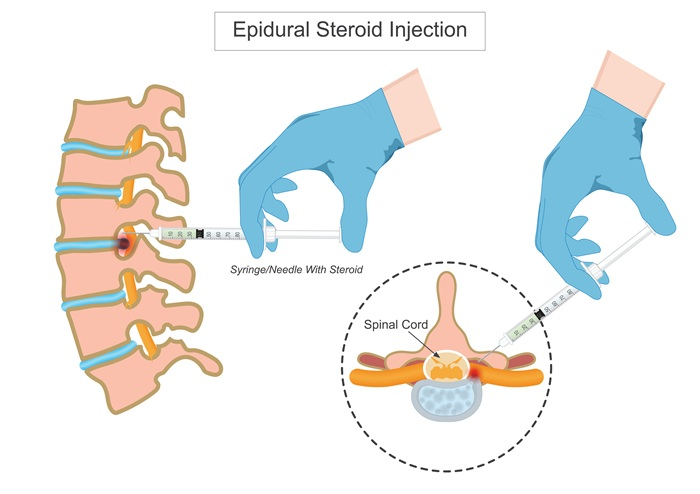
An epidural steroid injection involves the targeted delivery of a potent anti-inflammatory medication (typically a corticosteroid, often with a local anesthetic) into the epidural space around the spinal cord and nerve roots. This reduces inflammation and pressure on nerves, providing pain relief and giving the body time to heal.
Conditions Treated with Epidural Steroid Injections
ESIs are commonly used to treat the following MSK and spine-related conditions:
- Herniated discs (in the neck, upper back, or lower back)
- Sciatica (pain radiating down the leg from nerve irritation)
- Spinal stenosis (narrowing of the spinal canal)
- Radiculopathy
- Degenerative disc disease
- Facet joint arthritis
- Nerve compression or pinched nerves
- Vertebral bone spurs impinging on nerve
Types of Pain Treated
ESIs effectively manage:
- Neck, arm, back, and leg pain (depending on the level of injection)
- Pain caused by spinal nerve root inflammation or compression
- Shooting, radiating, or neuropathic pain patterns often associated with specific nerve root involvement
What to Expect: Before, During, and After the Procedure
Before Your Procedure
- You’ll have a review of your medical history and imaging studies.
- The physician will explain the procedure and answer questions.
- Consent will be obtained, and you’ll be advised about medications to withhold (e.g., blood thinners).
During the Procedure
- You’ll lie on a table, and the area will be sterilized
- A local anesthetic numbs the skin to maximize comfort.
- Under fluoroscopic (X-ray) guidance, the physician carefully places the needle into the epidural space, ensuring accuracy and safety.
- The steroid and anesthetic medications are injected, and the needle is removed.
- The procedure typically lasts 20 to 30 minutes.
After the Procedure
- You may rest briefly in a recovery area, then go home the same day.
- Mild soreness at the injection site is normal and usually resolves within 24 hours.
- Pain relief usually begins within 2–3 days but may take up to a week for full effect.
- You may resume normal activities the next day, but should have someone to drive you home.
The Benefits of Fluoroscopic Guidance
Using fluoroscopy (real-time X-ray) allows for:
- Highly accurate needle placement, ensuring medication delivery to the precise location of nerve irritation
- Reduced risk of complications by avoiding critical structures.
- Consistent, reproducible results for both diagnosis and therapy.

Expected Outcomes and Results
- Many patients experience 50% or greater pain relief and improved function.
- Relief may last for months and can sometimes be repeated if effective.
- ESIs provide a non-surgical option for managing pain and can delay or avoid the need for surgery in many cases.
- Results vary—some may need additional interventions, and the injections are most effective when combined with comprehensive MSK care.
Clinical Research & Safety
- Clinical research supports ESIs as an effective, minimally invasive treatment for radicular pain due to herniated discs, spinal stenosis, and other similar conditions.
- The rate of serious adverse events is low, but potential side effects (e.g., mild bone loss with repeated high dosing, local skin changes, or rare complications) are monitored.
- Guidelines recommend limiting the number of injections to minimize risk.
Integrative Care at Holistiq Spine & Orthopaedic
Holistiq utilizes a multidisciplinary, non-surgical approach for chronic MSK conditions. We combine ESIs with:
Peripheral magnetic stimulation
Chiropractic and manual therapy
Movement restoration and rehabilitation
For patients who require surgery, Holistiq coordinates with top surgeons and supports optimal pre- and post-op recovery using our integrative system.
Epidural steroid injections are one tool in a suite of evidence-based options to relieve MSK pain, restore function, and help you return to a better quality of life.
FAQs About Epidural Steroid Injections
Can I receive an epidural steroid injection if I am pregnant?
Epidural steroid injections are generally avoided during pregnancy unless absolutely necessary due to potential risks to the fetus and the effects of radiation from fluoroscopic guidance. If an injection is needed, your doctor will discuss alternative approaches and precautions.
Will an epidural steroid injection affect my existing medical conditions (like diabetes or high blood pressure)?
Steroid medications can cause temporary increases in blood sugar and, less commonly, blood pressure. Patients with diabetes, hypertension, or certain heart conditions should discuss these risks with their provider. Blood sugar and blood pressure may be monitored more closely after the procedure.
Are there any medication restrictions before the procedure?
Your provider may ask you to temporarily stop certain blood thinners or anti-platelet medications before the procedure to reduce the risk of bleeding. Always consult your prescribing doctor before making any medication changes.
Can I return to work after an epidural steroid injection?
Most patients can return to work and regular activities the next day. If your job is highly physical or involves heavy lifting, your doctor may recommend a brief period of modified duties.
Will the injection interfere with my vaccinations?
It’s recommended to discuss the timing of routine vaccines (such as flu or COVID-19 vaccines) with your doctor, as steroids can temporarily lower immune response. Your specialist can help you schedule the injection and vaccination for optimal benefit.
Are there any foods or supplements I should avoid after the injection?
While there are no strict restrictions, patients are encouraged to continue anti-inflammatory nutrition programs and avoid high-sugar foods, especially if they are at risk for elevated blood sugar due to the steroid.
Will I feel instant pain relief after the injection?
Yes, epidural steroid injections can be performed in the cervical (neck), thoracic (mid-back), and lumbar (low back) regions, depending on the location of the problem. The technique and risks may vary slightly by level.
Can I drive myself home after the procedure?
No, patients are advised to arrange a ride home as numbness, muscle weakness, or mild sedation can temporarily affect your ability to drive safely after the injection.
Can epidural steroid injections be used as a diagnostic tool?
Yes, ESIs not only treat pain but can help pinpoint the source of pain in complex spine cases by temporarily reducing inflammation in a specific nerve root, clarifying which nerve is involved.
Why Holistiq Spine & Orthopaedic?
- Root-Cause Diagnosis — Not just masking symptoms
- Integrated Services Under One Roof — Physical medicine, diagnostics, injections, nutrition and wellness
- Minimally Invasive & Regenerative First
- Physician-Led Team With Multispecialty Training
- Patient-Centered Philosophy — We listen, we personalize, we heal
Where Does It Hurt? We Can Help.






Procedures
- Bursa Injections
- Dorsal Root Ganglion (DRG) Stimulation
- Epidural Steroid Injection
- Facet Injections
- Gel Knee Injections
- Joint Injections
- Kyphoplasty
- Medial Branch Nerve Block
- Peripheral Nerve Block
- Radiofrequency Ablation
- Sacroiliac SI Joint Injection
- Spinal Cord Stimulator
- Sympathetic Nerve Block
- Trigeminal Nerve Block
- Trigger Point Injections