Lumbar Spinal Stenosis: Personalized, Non-Surgical Relief at Holistiq Spine & Orthopaedic
What Is Lumbar Spinal Stenosis?
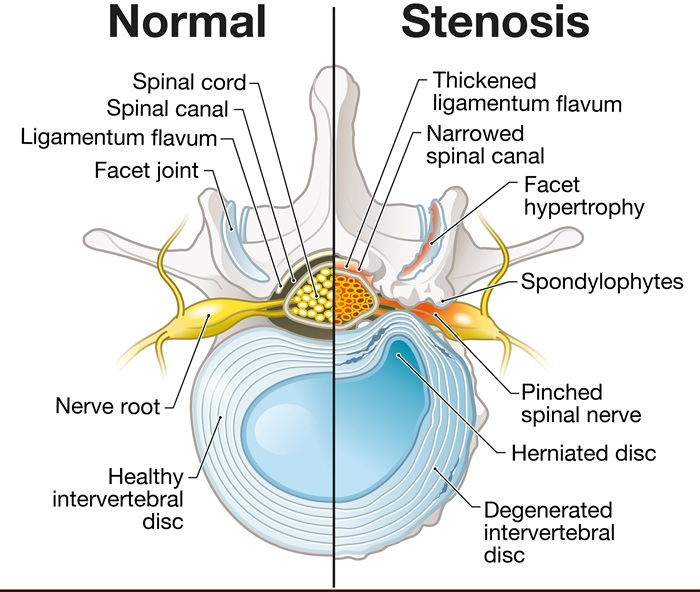
Lumbar spinal stenosis occurs when the spinal canal in the lower back narrows, compressing spinal nerves and sometimes the spinal cord. It is a common cause of chronic back and leg pain in adults over 50 and is typically caused by degenerative arthritis, disc bulging, or ligament thickening.
At Holistiq Spine & Orthopaedic, we offer advanced, non-surgical solutions that address the root cause of spinal narrowing and empower patients to move freely and live well.
Causes and Risk Factors
- Degenerative Disc Disease (age-related disc drying and collapse)
- Facet Joint Hypertrophy (arthritic overgrowth of joints)
- Ligamentum Flavum Hypertrophy (thickened ligaments compressing nerves)
- Spondylolisthesis (slippage of one vertebra over another)
- Herniated Disc
- Congenital Narrowing of the Spinal Canal
These changes reduce the space around spinal nerves, especially in motion or standing, often triggering pain and neurologic symptoms.
Common Symptoms
- Low back pain
- Leg pain that worsens with standing or walking (neurogenic claudication)
- Numbness or tingling in buttocks, thighs, or legs
- Weakness or heaviness in legs (especially with prolonged activity)
- Relief with sitting or leaning forward
- Balance difficulty or foot drop (in advanced cases)
Holistiq’s Diagnostic Protocol
Clinical Evaluation
- Posture and gait analysis
- Neurological reflex, strength, and sensation testing
Provocative maneuvers (e.g., treadmill walking, seated flexion relief)
Imaging
- MRI (preferred): Evaluates spinal canal narrowing and nerve root compression
- CT with Myelogram: Used if MRI is contraindicated or for surgical planning
- X-rays: Identify instability, vertebral slippage, or spondylolisthesis
Electrodiagnostics
- EMG/NCS: Confirm nerve root compression and differentiate from peripheral neuropathies

Non-Surgical Treatment Options
We specialize in avoiding surgery through a personalized, multi-modal, evidence-based care model that treats the root cause—not just the pain.
Conservative First-Line Treatments:
- NSAIDs for inflammation
- Short taper of oral steroids in acute flare-ups
- Activity modification, not prolonged rest
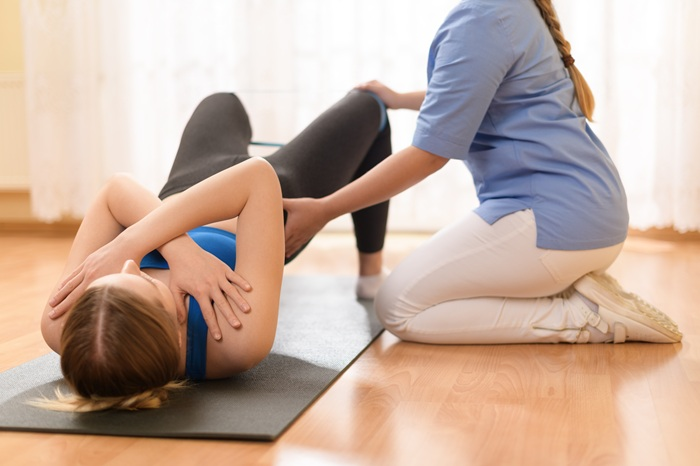
- Targeted chiropractic or physical therapy focused on pelvis girdle stabilization and neural glides
Holistiq’s Non-Surgical Lumbar Relief Program
We restore nerve health, calm inflammation, and correct mechanical imbalances—no surgery required.
1. Precision Anti-Inflammatory Nutrition Targeted Nutrition
Targeted nutrition plans designed to:
- Deliver essential nutrients like omega-3s, magnesium, and turmeric
- Reduce systemic inflammation with antioxidant-rich foods
- Promote gut health and balance hormones for optimal recovery
2. Shockwave Therapy
Powerful, non-invasive relief:
- Stimulates natural tissue repair via high-energy acoustic waves
- Breaks down scar tissue and persistent muscle knots
- Enhances spinal disc healing and restores mobility—no scalpels needed
3. Peripheral Magnetic Stimulation (PMS)
Deep-targeted neuromuscular reactivation:
- Rekindles deep spinal muscle function
- Decreases nerve irritation at the source
- Improves lumbar stabilization for long-term support
4. Chiropractic & Manual Therapy
Hands-on healing techniques:
- Gentle spinal adjustments and traction
- Lumbar decompression to reduce disc pressure
- Myofascial release and joint mobilization to restore movement
5. Image-Guided Injections (Case-Dependent)
For advanced cases, precision-guided care:
- PRP and stem cells to support annular healing and disc regeneration
- Epidural steroids for acute inflammation
- Medial branch blocks or radiofrequency ablation for facet-driven pain
6. Brain-Body Reset & Movement Restoration
Mind + nervous system optimization:
- TMS (Transcranial Magnetic Stimulation) to ease chronic pain and mood imbalance
- Pain neuroscience education to reframe your pain experience
- Mindfulness, CBT, and breathwork to regulate your stress response
7. Functional Rehabilitation
Get back to doing what you love:
- Core and isometric lumbar training
- Sciatic and femoral nerve glides for mobility
- Movement re-education for hiking, lifting, walking, and life

When to Consider Surgery
We reserve surgery for cases with:
- Progressive weakness, foot drop, or severe walking impairment
- Bowel/bladder dysfunction
- Imaging-confirmed compression with persistent symptoms despite 8–12 weeks of care
We provide pre-op counseling and post-op rehab to maximize long-term outcomes.
Lumbar Spinal Stenosis FAQ
Will I need surgery?
Most patients improve without it. Holistiq’s integrated plan helps delay or avoid surgery in 85–90% of cases.
Is this the same as sciatica?
Stenosis often causes sciatica-like symptoms but results from spinal narrowing, not always disc herniation.
Can I exercise with stenosis?
Yes—with guidance. Flexion-based and postural exercises often improve symptoms.
How long until I feel better?
Many patients see significant improvement within 4–12 weeks of starting treatment.
Why Holistiq Spine & Orthopaedic?
- Multidisciplinary team: PM&R, regenerative, manual therapy, and pain management
- Root-cause philosophy: We address structural, inflammatory, and neurologic drivers
- Innovative therapies: PMS, TMS, biologics, decompression
- Trusted by patients and physicians across DFW
Take the Pressure Off—Literally
Don’t let spinal stenosis steal your mobility. Reclaim your stride, posture, and confidence with Holistiq Spine’s advanced, non-invasive care.
Where Does It Hurt? We Can Help.