
Sleep Positions, Pillows, and Night Routines to Ease Lumbar Radiculopathy Flares
Why sleep matters so much with lumbar radiculopathy
Lumbar radiculopathy (often called “sciatica”) happens when a nerve root in your lower back is irritated or compressed. That irritation can send pain, tingling, or numbness into your buttock, thigh, calf, or foot. Nights are often the worst because you stay in one position longer, muscles tighten, and swelling and sensitivity can build.
Good sleep positions and support do three big things:
- Take pressure off the irritated nerve root.
- Calm protective muscle guarding in the low back and hips.
- Help your nervous system shift into “rest and repair” instead of “fight or flight.”
You can’t “sleep away” radiculopathy on its own, but you can turn your nights into part of the treatment plan instead of a nightly flare-up.
Best Sleep Positions for Lumbar Radiculopathy
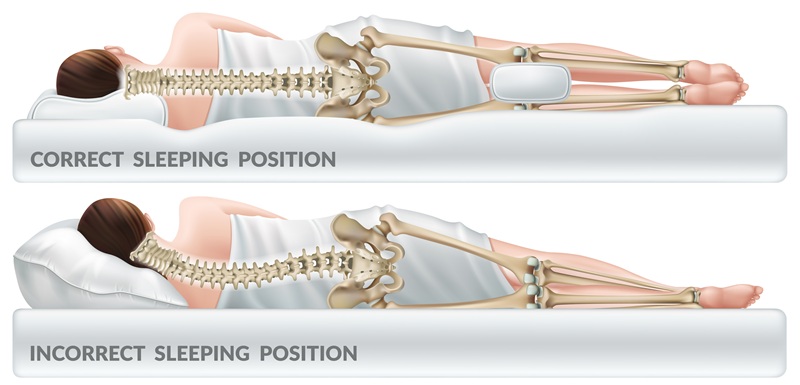
Everyone’s body is a little different, but most people with lumbar radiculopathy do better in positions that:
- Keep the spine relatively neutral (not extremely arched or twisted).
- Slightly open the space around the irritated nerve root.
- Take tension off the sciatic nerve and surrounding muscles.
Side lying with a pillow between the knees
This is often the easiest starting point.
How to set it up:
- Lie on your side (often the less painful side feels better, but experiment).
- Place a medium‑thickness pillow between your knees and ankles.
- Gently tuck your knees up a little, but not into a tight fetal curl.
- Keep your head supported so your neck is in line with your spine.
Why it helps:
- The pillow keeps your top leg from rotating and twisting your lower back.
- A slight bend in the hips and knees reduces pulling on the sciatic nerve.
- It supports the pelvis so you don’t “collapse” at the waist.
Small tweaks:
- If your waist sags toward the mattress, add a small towel under your side for support.
- If your top hip still feels sore, use a thicker pillow between the knees.
Back lying with a pillow under the knees
This is another classic position for many people with low back and leg pain.
How to set it up:
- Lie flat on your back.
- Slide a pillow or foam wedge under your knees so they are slightly bent.
- Let your arms rest comfortably at your sides or on your belly.
Why it helps:
- Slightly bending the knees tilts the pelvis in a way that reduces strain on the lower back.
- It lowers tension through the hamstrings and sciatic nerve.
- The spine rests closer to its natural curve instead of being pulled flat.
Small tweaks:
- If your low back still feels strained, try a second pillow under your knees.
- If your upper back or neck feels jammed, adjust your head pillow (more on that below).
Positions to be more cautious with
There are always exceptions, but these tend to be trickier for many people with lumbar radiculopathy:
- Stomach sleeping: Often increases extension and rotation in the low back, potentially closing down space where the nerve exits and putting the neck in a twist.
- Twisted positions: Lying half on your stomach, half on your side with one leg hiked way up can feel okay short term but often loads one side of the spine heavily.
If you’re a lifelong stomach sleeper, you might try:
- A very thin pillow or no pillow under your head.
- A pillow under the pelvis to reduce the arch in your low back.
But if your leg symptoms are consistently worse in this position, it’s worth training a new one over time.
Choosing and using pillows wisely
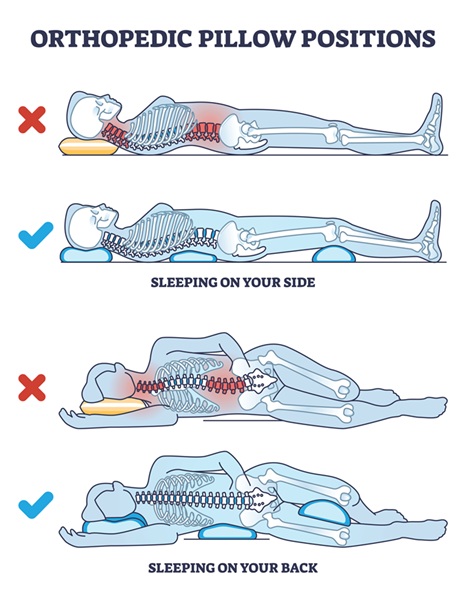
Pillows are cheap “orthotics” for your spine. You can do a lot with just a couple of them.
Pillow for your head and neck
The goal: Keep your neck in line with your spine, not cranked up or hanging down.
- Side sleepers: Typically need a thicker pillow that fills the space between shoulder and ear so your neck stays straight.
- Back sleepers: Often do best with a medium or thinner pillow that doesn’t push the head too far forward.
Pillows for your legs and hips
Leg support can dramatically change your back comfort:
- Between the knees and ankles (side lying):
- Keeps hips, knees, and ankles stacked.
- Reduces twist through the lower back.
- Under the knees (back lying):
- Lowers pull on the hamstrings and sciatic nerve.
- Gently flattens pressure in the low back.
Options:
- Standard bed pillow (folded if needed).
- Contoured knee pillow designed for side sleeping.
- Foam wedge under the knees if you like back lying.
Lumbar support pillows
If your mattress feels too soft and your low back sinks, a small lumbar roll or folded towel under the low back can sometimes help. For others, that feels like “too much” pressure. Test gently:
- Place a thin towel roll under your low back while lying on your back with knees supported.
- If you feel more supported and less sore, you’re on the right track.
- If you feel jammed or more compressed, remove it.
Setting up your mattress and sleep surface
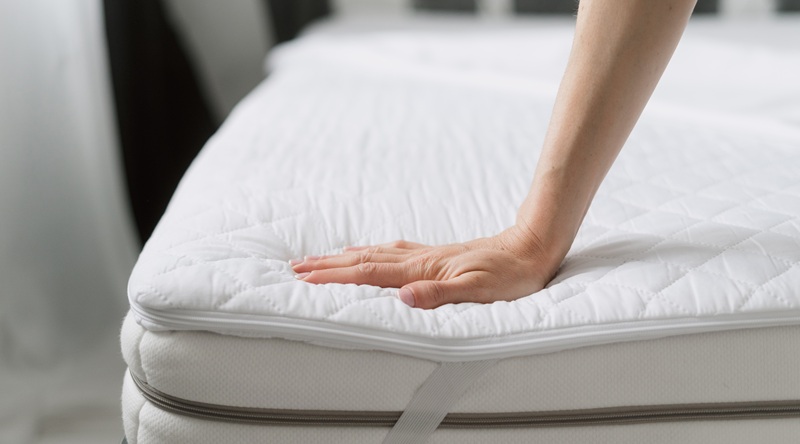
You don’t need the “perfect” mattress to feel better, but a few principles help:
- Too soft: You sink and twist; your spine and hips lose alignment, which can bother the nerve.
- Too hard: You might feel pressure points at the shoulders and hips, causing you to toss and turn more.
What often works best:
- Medium or medium‑firm mattresses that support your weight but still allow some contouring.
- If your mattress is very firm, adding a topper (like memory foam) can soften pressure points without fully replacing it.
- If it’s very soft and sagging, a firmer topper or a board under that sagging area may be a short‑term fix, but replacement is usually best over time.
Focus on:
- Can you stay in one position 20–30 minutes without needing to move because of pain?
- Does your back feel better, worse, or the same when you get out of bed?
Night routines that calm flares (not feed them)
What you do in the hour before bed can either quiet your nervous system or wind it up.
Gentle movement and position resets
- Do a short, easy routine 20–30 minutes before bed:
- A few minutes of gentle walking around your home.
- Light stretching of hips and back (in pain‑free ranges).
- Some very easy core activation (like lying on your back and gently tightening your lower belly).
Why:
- Light movement pumps fluid, reduces stiffness, and tells your body it’s safe to relax.
- It’s often better than going straight from a long day of sitting to lying flat.
Heat or cold (if cleared by your provider)
Many people find:
- Warmth (heating pad on low or a warm shower) relaxes tight muscles and helps them ease into a comfortable sleep position.
- Cold (ice pack wrapped in a thin cloth) can numb sharp, localized pain.
Tips:
- Use low or moderate settings and a barrier (towel, pillowcase).
- Limit to around 15–20 minutes at a time so you don’t irritate the skin.
Wind‑down for your nervous system
Pain signals are louder when your brain is stressed and keyed up. A few habits help:
- Keep a regular bedtime and wake time when possible.
- Dim lights and avoid bright screens at least 30 minutes before bed.
- Try slow breathing in bed:
- Inhale gently through the nose for about 4 seconds.
- Exhale slowly for about 6 seconds.
- Repeat for a few minutes.
This type of breathing calms the nervous system and can reduce the intensity of pain signals.
Throughout this roadmap, regular reassessment is essential so that treatments can be escalated, combined, or tapered based on your goals and response.
FAQs
1. What is the single best sleep position for lumbar radiculopathy?
There isn’t one “best” position for everyone, but side lying with a pillow between the knees or lying on your back with a pillow under the knees helps many people. The best position is the one that lets you fall asleep, stay asleep longer, and wake with less leg and back pain. If your symptoms improve with a position, that’s a good sign it’s working for you.
2. Is it bad to wake up on my stomach?
Not necessarily—it just might not be ideal for your back and nerve. Many people roll onto their stomach at some point. If you consistently wake up more painful when on your stomach, try:
- Falling asleep in a supported side or back position.
- Using a pillow against your front when side lying to reduce the urge to roll fully onto your stomach.
If stomach sleeping doesn’t flare your symptoms, it may not be a priority to change right away.
3. Do I need a special “orthopedic” pillow or mattress?
Fancy pillows and mattresses can help, but they aren’t magic. Often, you can create a good setup using:
- Your existing mattress (if it isn’t heavily sagging).
- A couple of regular pillows or a foam wedge.
- If you’re considering new products, look for:
- A pillow that keeps your neck in line with your spine in your usual position.
- A medium to medium‑firm mattress that supports your hips and shoulders without big pressure points.
- Try to test options in person if you can, and remember: how you position your body matters more than the brand name.
4. My pain always ramps up when I first lie down. Is that normal?
It’s common for symptoms to feel sharper when you first lie down because:
- Your muscles are adjusting from being upright all day.
- The way you position your spine and legs suddenly changes nerve tension.
- Often, this settles within a few minutes as you find a more supported position. If pain keeps building instead of easing, adjust:
- Add or remove a pillow.
- Slightly change hip and knee bend.
- Try the other side or move from back to side lying.
5. Should I use heat or ice before bed?
Both can be useful:
- Heat is great for tight, achy muscles and general stiffness.
- Ice is often better for sharper, more localized pain.
You can even alternate depending on how you feel. Use whichever: - Lets you relax.
- Doesn’t make symptoms worse afterward.
Always use a barrier and avoid falling asleep directly on a hot or cold pack.
6. Is it okay to take pain medication at night so I can sleep?
Many people with lumbar radiculopathy do take medication, including at night, under a provider’s guidance. Good sleep is important for healing and coping with pain. The key is:
- Follow your provider’s instructions on timing and dosage.
- Combine medication with good positioning and routines, not instead of them.
If you rely on increasing doses just to get any sleep, or if medication stops working, talk to your provider—your overall plan may need adjustment.
7. How long before I notice a difference in my sleep?
Some changes (like adding a pillow between the knees) can help the very first night. Others, like training your body out of stomach sleeping or building a new night routine, take a few weeks. Focus on:
- Gradual improvements in how fast you fall asleep.
- Fewer wake‑ups from pain.
- Less morning stiffness or leg pain.
Even small wins matter; they add up over time as part of your bigger recovery plan.