
Platelet-Rich Plasma: PRP Injection For Pain Relief
Regenerative Medicine for Pain Relief at Holistiq Spine & Orthopaedic
When pain lingers for months despite rest, medications, and physical therapy, it is natural to look for options that do more than temporarily “numb” the problem. Platelet-rich plasma (PRP) therapy uses a concentrated portion of your own blood to support healing in painful joints, tendons, and ligaments. At Holistiq Spine & Orthopaedic, our specialists offer image-guided PRP injections as part of a comprehensive plan to reduce pain, improve function, and help many patients delay or avoid surgery.
What Is PRP?
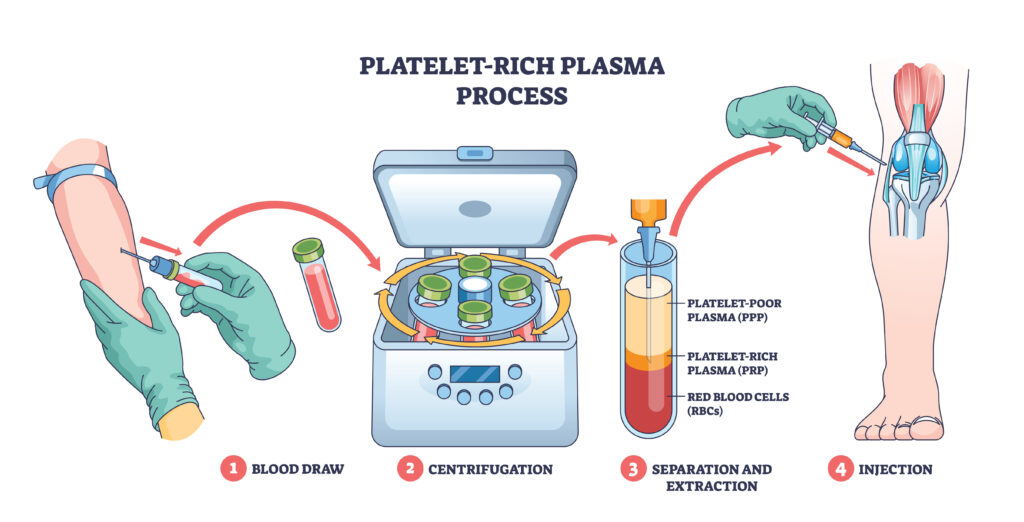
Platelet-rich plasma is made from your own blood. A small sample is drawn from your arm and spun in a centrifuge to separate and concentrate the platelets. These platelets are rich in growth factors and signaling proteins that play an important role in tissue repair. The PRP is then injected directly into the injured or degenerated area—such as a knee joint, tennis elbow tendon, or painful shoulder—often under ultrasound or fluoroscopic guidance for accuracy.
In simple terms, PRP is designed to:
- Deliver a higher-than-normal concentration of platelets to a specific injury site
- “Restart” or enhance the body’s natural healing response
- Support healthier tissue over time rather than only blocking pain signals
Because PRP uses your own blood (autologous), the risk of allergic reaction is low compared with many synthetic medications.
Conditions and Body Areas PRP Can Help
PRP is most often used for musculoskeletal conditions where tissue damage and inflammation are driving pain.
Common conditions we treat with PRP at Holistiq include:
- Mild to moderate knee osteoarthritis
- Hip or shoulder osteoarthritis in selected patients
- Tennis elbow (lateral epicondylitis) and golfer’s elbow
- Rotator cuff–related tendon problems
- Patellar tendinitis (“jumper’s knee”)
- Chronic Achilles tendinopathy
Plantar fasciitis - Certain ligament sprains and sports-related overuse injuries
Typical body areas:
- Knees
- Hips
- Shoulders
- Elbows
- Ankles and feet
If your pain has persisted for more than 3–6 months despite conservative care, PRP may be one option to consider.
Who Is a Good Candidate for PRP?
You may be a good candidate for PRP if:
- You have ongoing joint, tendon, or ligament pain that has not improved enough with:
- Activity modification
- Physical therapy
- Oral or topical medications
- Possibly prior cortisone or other injections
- Your imaging and exam suggest mild to moderate tissue damage rather than severe “bone-on-bone” arthritis
- You want to explore non-surgical options before committing to more invasive procedures
- You are willing to follow post-injection guidelines and participate in rehabilitation
You may not be a good candidate if you have uncontrolled major medical conditions, blood or clotting disorders, active infection, or advanced joint degeneration where joint replacement is clearly recommended. The best way to know is through a careful evaluation with our team.
Benefits of PRP Therapy
PRP is not a miracle cure, but for the right patient and condition it can be a powerful tool.
Potential benefits include:
- Using your own blood—no synthetic implant or donor tissue required
- Targeted treatment delivered exactly where you hurt mos
- Support for tissue repair in joints, tendons, and ligaments
- Reduced dependence on repeat steroid injections
- Minimally invasive, outpatient procedure with relatively quick recovery
- Potential to delay or avoid surgery for some patients with early-stage disease
Many people notice a gradual reduction in pain and stiffness and an improvement in function over weeks to months when PRP works well for them.
Risks and Limitations
Like any medical procedure, PRP has risks and limitations.
Common, usually mild side effects may include:
- Soreness, warmth, or swelling at the injection site
- Temporary increase in pain for a few days
- Bruising or minor bleeding
Less common but important risks can include:
- Infection at the injection site
- Injury to nearby structures
- Persistent or worsening pain if the underlying condition progresses
Less common but important risks Limitations to keep in mind:
- Results are not guaranteed, even in ideal candidates
- Improvement, if it occurs, is usually gradual, not immediate
- Most insurance plans do not cover PRP, so many patients pay out-of-pocket
At Holistiq, we discuss all of these factors with you before any decision is made, so you can weigh PRP alongside other options.
What to Expect From PRP at Holistiq
1. Evaluation and Planning
- Comprehensive medical history and physical examination
- Review of imaging such as X-rays or MRI, when available
- Discussion of what you have already tried and what your goals are
- Honest guidance on whether PRP, another procedure, or surgery makes the most sense
2. The PRP Procedure
- Blood draw from your arm
- PRP preparation in a specialized device
- Cleaning and numbing the injection area
- Image-guided PRP injection into the targeted joint, tendon, or ligament
The entire visit typically takes about 45–90 minutes, with the injection itself lasting only a few minutes.
3. Recovery and Follow-Up
- Expect soreness for a few days after the injection
- Short-term activity modification followed by gradual return to normal routines
- Integration with physical therapy or guided exercises to enhance results
- Follow-up visit(s) to monitor pain, function, and next steps
Some patients receive a single PRP treatment; others may benefit from a series of injections depending on diagnosis and response.
PRP Therapy FAQs
Is PRP safe?
PRP uses your own blood components, so allergic reactions are rare. The main risks are those of any injection—temporary pain, swelling, bruising, or infection. Serious complications are uncommon when procedures are done with proper technique and imaging guidance.
How quickly will I feel better?
You may feel more sore for several days after the injection. If PRP helps, improvements in pain and function typically develop gradually over several weeks and may continue for months.
Will PRP replace surgery?
For some patients, PRP can delay or reduce the need for surgery, especially in earlier disease stages. It cannot reverse severe joint damage in every case, and surgery may still be the best option for advanced conditions.
Is PRP covered by insurance?
Most insurance plans currently do not cover PRP for musculoskeletal conditions. Our team will explain costs clearly and help you compare PRP with other covered and non-covered treatments.
How many treatments will I need?
Many people receive one to three PRP sessions, spaced weeks apart, depending on their diagnosis and response. This is tailored to each patient.
Ready to Explore PRP?
If knee, shoulder, hip, or tendon pain is keeping you from the activities you enjoy and standard treatments haven’t provided enough relief, PRP therapy may be worth a closer look. At Holistiq Spine & Orthopaedic, we combine advanced PRP techniques with careful diagnostics, image guidance, and individualized rehabilitation to give your body the best chance to heal.
Where Does It Hurt? We Can Help.