
Shoulder Bursitis Symptoms
Recovery, & Holistic Non-Surgical Care
Shoulder bursitis can transform simple tasks—reaching overhead, lifting a bag, sleeping on your side—into a daily struggle. This guide offers everything you need to understand bursitis: from anatomy and causes, to symptoms, diagnosis, holistic conservative care, and long-term prevention. At Holistiq Health, we use advanced therapies and a multidisciplinary, insurance-friendly approach to help you restore comfort and protect your mobility.
What Is Shoulder Bursitis? Anatomy & Function
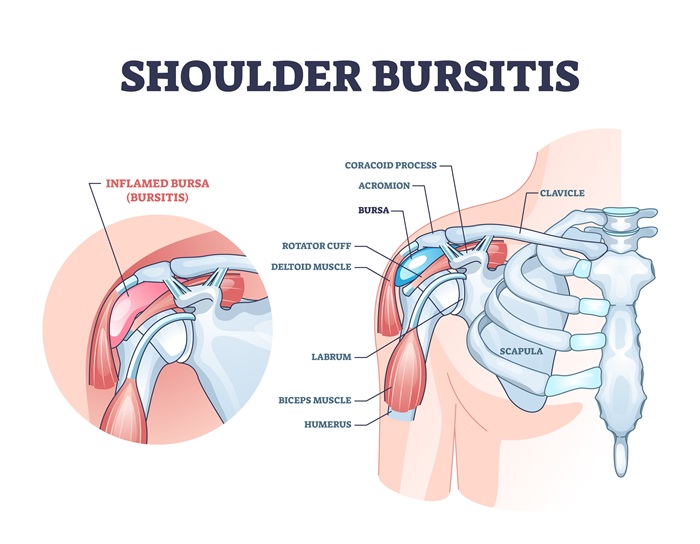
The shoulder is designed for powerful, versatile movement—enabled by a complex interplay of bones, muscles, tendons, and bursae. Bursae are tiny, fluid-filled sacs positioned at areas where tendons, muscles, or skin must glide smoothly over bone. Their main role is to cushion and reduce friction during movement, acting much like protective pads within the joint.
Key Shoulder Bursae
- Subacromial bursa: The most important bursa in the shoulder, lying between the acromion (top of the shoulder blade) and the rotator cuff tendons. It prevents these tendons from rubbing directly on bone, especially during overhead movements.
- Subdeltoid bursa: Often connected to the subacromial bursa and supports smooth deltoid movement.
- There are additional, smaller bursae (subcoracoid, subscapular) that play similar cushioning roles below the surface.
When a bursa becomes inflamed—due to overuse, injury, or infection—it swells and produces excess fluid, a condition known as bursitis. This swelling causes pain, restricts motion, and may lead to compensatory injuries if untreated.

Causes & Risk Factors for Shoulder Bursitis
Understanding how bursitis develops is vital to treatment and prevention.
Common Causes
- Repetitive overhead motion: Sports (swimming, tennis, baseball), occupations (painting, construction, warehouse work), and even home chores can overload the subacromial bursa, leading to irritation and inflammation.
- Direct trauma or falls: A sudden blow or landing on the shoulder may physically injure the bursa.
- Rotator cuff pathology: Tears, tendinitis, or impingement syndromes often coexist with or precipitate bursitis.
- Degenerative changes: Over time, chronic friction or small calcium deposits can inflame the bursa.
- Arthritis and inflammatory diseases: Conditions such as rheumatoid arthritis or gout increase risk.
Medical Risk Factors
- Diabetes: Increases vulnerability to all soft-tissue injuries.
- Infection: Though rare, bacteria can infect the bursa (septic bursitis), usually after a cut or wound.
- Age: Bursitis is more common after age 40 due to tissue “wear and tear”
High-Risk Populations
- Athletes, especially in overhead or throwing sports
- Manual laborers or those with repetitive work duties
- Individuals with a prior shoulder injury or surgery

Symptoms: Recognizing Shoulder Bursitis
Shoulder bursitis can be subtle at first, but often becomes progressively limiting if not addressed. Common symptoms include:
- Dull, aching pain—especially with arm movement, lifting, or reaching overhead.
- Stiffness and reduced range of motion that make activities like combing your hair or reaching behind your back challenging.
- Tenderness and swelling: The outer shoulder may become puffy or sensitive to touch.
- Pain at rest and at night: Lying on the affected side often aggravates discomfort, disrupting sleep.
- Warmth or redness: Less common, but can signify severe inflammation or infection.
- Sudden sharp pain or loss of function: Seek urgent care, as this may suggest a tear or infection.
These symptoms often overlap with rotator cuff injuries and arthritis, so an expert evaluation is crucial.
Meet Our Specialists

Trung Ha, MD

Raphael Ye, DO

Yasmin Fatemi, MD

Brian Lee, DC

Stephanie Yianitsas, PA-C

Diagnosis: How Is Shoulder Bursitis Identified?
Accurate diagnosis ensures the right treatment and reduces the risk of chronic problems. The Holistiq Health team uses a systematic, evidence-based process:
Medical History & Physical Examination
- Providers take a thorough history of symptoms, injury, activity patterns, and medical conditions.
- Physical exam includes:
- Palpation: Gentle pressure to locate tender or swollen areas.
- Range-of-motion testing: Checking active and passive shoulder movement.
- Special maneuvers: Designed to distinguish bursitis from rotator cuff tears or tendinitis.
Imaging Tests
- Ultrasound: Excellent for detecting bursal swelling, fluid buildup, and ruling out tendon tears.
- MRI: Used for complex or persistent cases to visualize tendons, bursae, and surrounding tissues in detail.
- X-rays: Can check for bone spurs, fractures, or calcium deposits, but do not show bursae directly.
Differential Diagnosis
- Rotator cuff tear
- Tendinitis
- Shoulder arthritis
- Frozen shoulder (adhesive capsulitis)
- Infection (septic bursitis; identified by fever, redness, and severe symptoms)
If infection is suspected, fluid may be aspirated (withdrawn with a needle) and sent for lab testing.
Holistiq Non-Surgical Treatment Plan for Shoulder Bursitis
Our approach targets root causes, relieves pain, restores function, and empowers you to avoid recurrence. We accept all major health insurance plans, making your road to recovery both effective and financially accessible.
1. Rest, Education, and Activity Modification
- Immediate attention to aggravating movements is essential.
- Education empowers patients to understand their limits during the healing phases—avoiding overhead lifting and repetitive strain.
2. Anti-Inflammatory Nutrition
- Our clinicians develop personalized plans focused on nutrient-rich, inflammation-lowering foods: leafy greens, berries, fish, nuts, whole grains, and minimized processed sugar.
- Some individuals benefit from specific dietary adjustments or supplements under medical guidance.
3. Physical Therapy and Rehabilitation
- Gentle, progressive mobility and stretching exercises reduce stiffness and swelling.
- Strengthening for shoulder and upper back muscles supports optimal biomechanics.
- Posture training and ergonomic coaching are integrated for daily activities at home and work.
4. Chiropractic Care and Manual Therapy
Gentle spinal and shoulder adjustments, soft tissue release, and therapeutic massage can improve biomechanics, decrease tension, and encourage healing.
5. Shockwave Therapy
High-energy sound waves stimulate blood flow and cellular repair, aiding in persistent bursitis where inflammation lingers after initial therapy.
6. Pain Management with Injections
- For severe or persistent inflammation, ultrasound-guided corticosteroid injections target pain at its source, decreasing symptoms rapidly.
- These are used selectively and combined with therapy for maximal benefit.
7. Regenerative Medicine
- Platelet-rich plasma (PRP) injections or other biologic treatments may stimulate bursa and tendon repair in stubborn cases.
- These treatments are appropriate for chronic bursitis not responsive to standard care, and are always paired with physical therapy.
8. Modalities and Supportive Care
- Ice and heat: For swelling, pain, and stiffness—applied several times daily.
- Supportive slings or braces: Rarely needed but may rest the joint in severe cases, always for the shortest effective duration.
- Ongoing assessment: Regular check-ins with the Holistiq team ensure treatment evolves as you heal.

Recovery and Prevention
Typical recovery:
- Most patients feel significant relief within 2–8 weeks with consistent, multidisciplinary care.
- More chronic or severe bursitis may require several months of therapy.
Prevention:
- Ergonomic assessments (for work and sports) to reduce repetitive overhead use.
- Routine strengthening and flexibility habits for the shoulder, neck, and back.
- Early attention to shoulder pain or stiffness—halt aggravating activities and seek assessment before symptoms worsen.
- Manage chronic diseases (e.g., diabetes, rheumatoid arthritis) in cooperation with your primary care provider.
FAQs
How is shoulder bursitis different from rotator cuff tendinitis or tear?
Bursitis involves inflammation of the fluid-filled sac cushioning the joint, while tendinitis and tears involve the surrounding tendons. These problems often occur together, but treatment and prognosis can differ.
Do all cases require injections or surgery?
No. Most patients recover fully with holistic, conservative care. Injections are only recommended for severe, persistent pain and are always partnered with physical therapy for best effect. Surgery is exceptionally rare and reserved for chronic, unresponsive bursitis or cases with underlying structural problems.
How long does recovery usually take?
Typical cases improve in 2–8 weeks. Recurring or severe bursitis might take longer, but long-term improvement is common with adherence to therapy and prevention strategies.
Is bursitis preventable?
You can reduce risk greatly by using healthy lifting techniques, addressing posture, staying active, and building shoulder resilience. Quick response to early pain can often halt the progression to chronic bursitis.
Will my insurance cover treatment at Holistiq?
Holistiq Health accepts all major health insurance; our team will confirm benefits, answer billing questions, and work with workers’ compensation claims as needed.
What should I do if symptoms suddenly worsen or I develop a fever?
Seek immediate assessment. Sudden, severe pain, swelling, or fever may signal infection or a more serious injury requiring urgent care.
Take Control of Your Shoulder Pain
Don’t let shoulder pain control your life. At Holistiq Health, our expert team specializes in identifying the true causes of bursitis and designing modern, evidence-based, non-surgical treatment plans that address the whole person. We’ll guide you through every phase—from diagnosis to prevention and long-term resilience—using nutrition, physical therapy, advanced manual techniques, shockwave therapy, regenerative medicine, and targeted injections when needed.
Where Does It Hurt? We Can Help.