Best Shoes for Plantar Fasciitis in 2026
An Expert Guide to Walking, Running, Work & At‑Home Footwear
Shoes won’t cure plantar fasciitis on their own, but choosing the right pair for exercise, work, and at home is one of the most powerful ways to control pain and support healing alongside treatments like physical therapy, shockwave, and injections at Holistiq Spine & Orthopaedic. From our clinical perspective, we look for specific features—strong arch support, a stable heel, and shock absorption—and then match them to your daily activities so your plantar fascia is protected from the moment you get out of bed to the time you go back to sleep.
What plantar‑fasciitis‑friendly shoes all share
Podiatrists and footwear researchers consistently recommend the same core design elements for plantar fasciitis.
Key features to look for:
- Structured arch support to reduce strain on the plantar fascia as it stretches with every step.
- A deep, firm heel cup to cradle the heel bone and limit side‑to‑side motion that tugs on the fascia.
- Generous cushioning under the heel to soften impact at heel strike, especially important during walking and running.
- A stable, relatively stiff midsole that does not twist easily, which prevents the foot from collapsing inward (overpronation).
- A wide, stable base and roomy toe box so your foot does not roll or cram forward with each step.
At Holistiq Spine & Orthopaedic, we use these same criteria when advising patients, then layer on your foot type (flat vs high arch), weight, and activity level to fine‑tune brand and model recommendations.
Best shoes for exercise and walking
When you have plantar fasciitis, your workout shoe must protect the fascia with every step while still allowing you to move naturally. Podiatrist‑reviewed lists increasingly highlight specific models from Hoka, Brooks, Asics, New Balance and Kuru because they combine cushioning, stability and a supportive heel.
Examples of strong options for walking and light running:
Brooks Adrenaline GTS (current versions such as GTS 25) – Highly regarded as an all‑around walking and light running shoe for plantar fasciitis, with a supportive heel, firm but cushioned midsole, and stability features that control overpronation.
Hoka Bondi – Frequently recommended by podiatrists for plantar fasciitis due to its very thick, rockered sole that offloads pressure from the heel and provides a smooth roll through toe‑off.
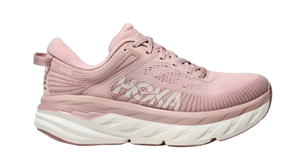
Asics Gel‑Kayano and Gel‑Nimbus – Stability (Kayano) and neutral‑cushion (Nimbus) shoes with firm medial support, good heel cushioning, and relatively stiff heel counters to limit excessive heel motion.
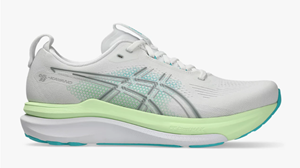
Saucony Triumph or Omni (running/walking lines) – Well‑cushioned shoes with supportive construction that have been repeatedly identified as good choices for plantar fasciitis sufferers.
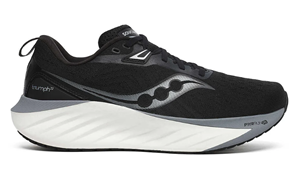
Kuru walking/running shoes – Designed specifically with plantar fasciitis in mind, with built‑in arch support and heel‑cup technology to reduce heel pain.
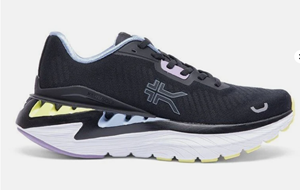
For the gym, these same models often work well on treadmills and for low‑impact strength training. For heavy lifting or sports that demand side‑to‑side cutting, we may instead suggest a cross‑trainer that still meets the core criteria of arch support, heel stability and impact protection.
Best shoes to wear around the house
One of the biggest hidden drivers of plantar fasciitis flare‑ups is walking barefoot or in flat, unsupportive slippers at home. Expert guides emphasize that people with plantar fasciitis should treat the home like any other surface and wear structured shoes indoors.gravitydefyer+1
Supportive “house shoes” to consider:
- Supportive slippers and clogs (Vionic, OOFOS, OrthoFeet, Birkenstock, Fulton) – These brands build arch support, contoured footbeds, and deep heel cups into slip‑on designs, making them ideal at‑home options for plantar fasciitis.
- Cork‑footbed sandals or clogs (e.g., Birkenstock) – Cork molds to your foot over time while maintaining firm support, which many plantar fasciitis sufferers find more helpful than soft memory‑foam slippers that quickly flatten.
- Dedicated house shoes with orthopedic insoles (e.g., Fulton House Shoes) – Designed specifically to reduce plantar fascia tension during long periods of standing and walking indoors.
From our clinic’s standpoint, the rule of thumb is simple: your first steps out of bed should be into supportive footwear, not onto bare floors. Even something as simple as a supportive slide or clog by your bedside can significantly reduce the intense “first‑step” pain we often hear about.
Professional and dress shoes that still support your feet
Many patients at Holistiq Spine & Orthopaedic need shoes that look polished enough for the office or formal events but still help manage plantar fasciitis. While the research focus is often on athletic shoes, podiatrists and footwear specialists point to several features that translate into dressier styles as well.
Professional‑friendly features:
- Low, stable heels (ideally under about 1–1.5 inches) to avoid shifting too much weight to the forefoot and tightening the calf–Achilles complex.
- Built‑in arch support or compatibility with custom orthotics, with removable insoles being a big plus.
- Firm heel counters and structured leather or synthetic uppers rather than floppy, collapsible styles.
- Slight rocker soles in some loafers or dress shoes, which can reduce forefoot and heel loading as you walk.
Brands that often appear in podiatrist‑guided lists of plantar‑fasciitis‑friendly shoes include OrthoFeet and Kuru for more casual/professional looks, and certain supportive lines from major comfort brands; these are favored because they put orthotic‑style support into more office‑appropriate silhouettes. In clinic, we will commonly pair such shoes with either over‑the‑counter or custom orthotics to create a professional but therapeutic setup.
Overview of shoe types for plantar fasciitis
Here is a simplified overview of how different shoe categories can support plantar fasciitis when chosen carefully.
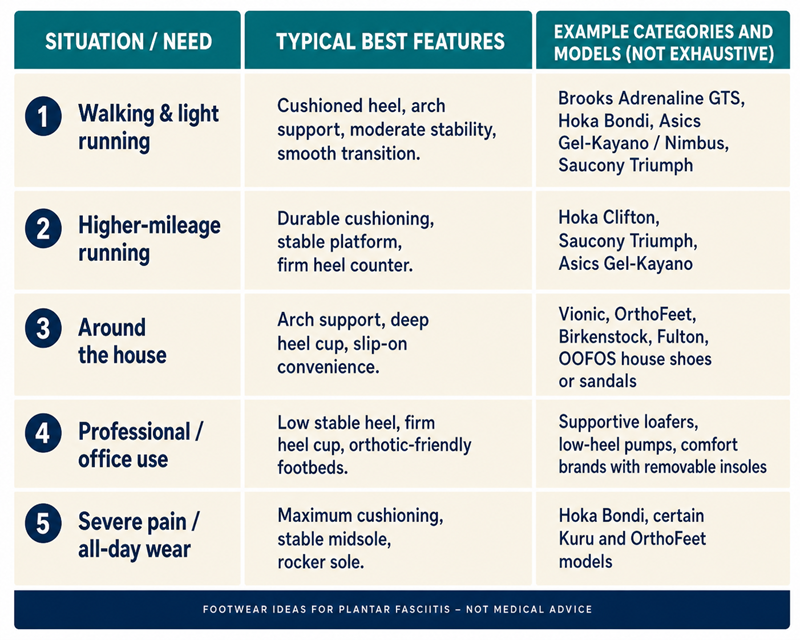
All of these work best when matched to your individual biomechanics, which is why we pair shoe recommendations with a physical exam and, when needed, imaging at our clinic.
How shoes fit into a comprehensive treatment plan
Research‑based guides stress that footwear is only one part of a complete plantar fasciitis plan. In our experience at Holistiq Spine & Orthopaedic, the best outcomes come from combining the right shoes with targeted medical and rehabilitative care.
Common components of evidence‑based care:
Activity and load management
Adjusting standing, walking and running volume so the fascia has time to calm down while you remain as active as possible.
Stretching and mobility
Regular stretching of the plantar fascia and Achilles tendon has been shown to reduce symptoms for many patients.
Strengthening and physical therapy
A structured program to strengthen the intrinsic foot muscles, calf complex, and hip stabilizers can improve foot mechanics and reduce recurrence.
Orthotics
Over‑the‑counter or custom orthotics can add arch support and heel cushioning, especially in shoes that do not offer enough on their own.
Shockwave therapy
Extracorporeal shockwave treatment can stimulate healing in chronic plantar fasciitis cases that have not responded to more conservative care.
Injections
In selected cases, guided injections can reduce inflammation and pain to allow you to progress with rehabilitation.
Our role at Holistiq is to integrate these tools. If, for example, your job demands long hours on hard floors, we may prioritize maximum‑cushion shoes and custom orthotics, then combine them with shockwave therapy and a focused home exercise program to get you back to full function as quickly and safely as possible.
Practical tips when buying plantar fasciitis shoes
Because marketing can be confusing, it helps to approach shoe shopping with a simple, clinic‑tested checklist based on what podiatrists and reviewers consistently recommend.
Use this quick process:
- Test the twist.
Pick up the shoe and try to twist it side‑to‑side. A good plantar‑fasciitis‑friendly shoe should resist twisting and feel relatively rigid through the midfoot. - Bend at the right spot.
The shoe should flex mainly at the ball of the foot, not in the arch. Excess bending under the arch allows the fascia to overstretch. - Check the heel.
Press on the back of the heel. A firm heel counter that does not mash down easily will improve heel alignment and reduce stress on the fascia. - Assess arch and cushioning.
Look for a noticeable arch contour and substantial heel cushioning rather than a totally flat insole or thin, hard sole. - Try them on at the end of the day.
Your feet swell slightly over the day. Trying shoes late in the day helps ensure they won’t be too tight when your feet are at their largest.
For many of our patients, we also recommend having at least two supportive pairs—one for exercise and outdoor use, one as a dedicated house shoe—so the cushioning materials can rebound between wears and you are never tempted to go barefoot on hard surfaces.
When to involve a clinic like Holistiq
If you have switched to supportive shoes but still wake up with sharp heel pain, or your symptoms limit your exercise and work, that is the time to move beyond self‑management. Authoritative guides emphasize that when plantar fasciitis persists, structured medical care is appropriate.
At Holistiq Spine & Orthopaedic, we:
- Perform a detailed biomechanical assessment to see how your foot, ankle, knee, hip and spine interact.
- Review your current footwear and orthotics, often making small changes that significantly improve comfort.
- Design a custom physical therapy program focused on tissue loading, flexibility and strength.
- Offer advanced options like shockwave therapy and image‑guided injections when conservative care alone is not enough.
Our goal is to keep you moving: the right shoes reduce day‑to‑day strain, while our treatments address the underlying tissue irritation so you can gradually return to the activities you love.
If you had to choose just one situation to optimize first—exercise, work, or at‑home comfort—which feels most important for your daily life right now?