
The Hidden Burden of Chronic Pain in the Modern Workplace
Chronic pain is an epidemic silently shaping the workforce. The Centers for Disease Control and Prevention (CDC) reports that 51.6 million U.S. adults—about 21% of the population—live with chronic pain, and 7% with high-impact chronic pain that consistently restricts their work and daily life.
Pain doesn’t exist in isolation; it’s deeply tied to mental health. Unmanaged pain contributes to increased risks for depression, substance abuse, and even cognitive decline. Companies that overlook these connections risk higher rates of turnover, burnout, and lost productivity.
The ripple effects are significant:
- Chronic musculoskeletal (MSK) pain leads to an average of 10.3 missed workdays per employee per year.
- Overall, absenteeism associated with chronic pain and related illnesses cost U.S. businesses approximately $2,945 per employee each year.
- Chronic pain remains a leading cause of lost work capacity—over 14 million Americans are unable to work due to high-impact chronic pain.
- Employees with chronic pain are 47% more likely to report workplace threats or abuse, and a third feel their pain is stigmatized, further impacting engagement and morale.

Workplace Culture: The Hidden Determinant
A company’s culture defines whether employees feel safe disclosing pain and seeking help—or suffer in silence. Many workers, especially those with chronic pain, describe their employment experience as a “balancing act”—managing pain while meeting work demands, often without adequate support.
Key challenges include:
- Inadequate Policies: Workplace pain and disability accommodations are often vague or inconsistently applied.
- Undertrained Managers: Line managers are critical to employee experience but frequently lack knowledge about pain management or awareness of supportive resources.
- Ergonomic Barriers: Many employees face poor working conditions or lack of access to ergonomic equipment, contributing to repeated or worsening injury.
Organizational culture—whether open, flexible, and supportive, or rigid and dismissive—directly affects whether employees can thrive despite chronic pain.
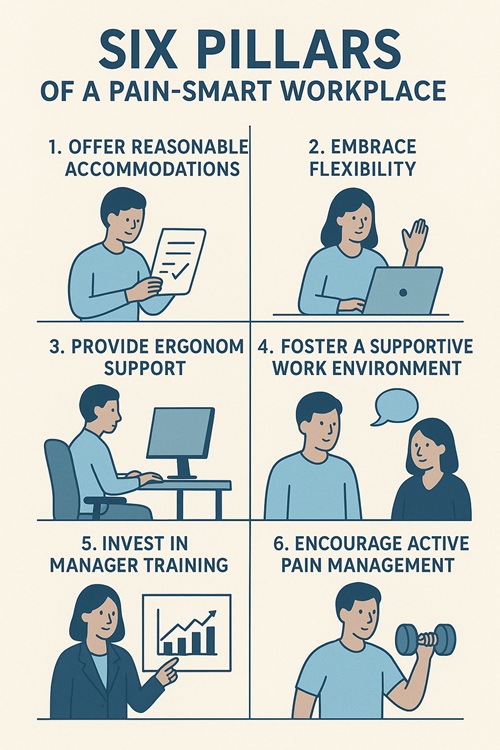
Six Pillars of a Pain-Smart Workplace
1. Offer Reasonable Accommodations
Employers are legally and ethically obligated to provide reasonable accommodations for those in chronic pain. These may include:
- Modifying job responsibilities or physical requirements.
- Providing sit-stand workstations, adjustable desks, or assistive devices.
- Implementing phased or gradual return-to-work programs post-injury.
Research shows that combined pharmacological and non-pharmacological pain-relief strategies—ranging from medication to physical therapy and ergonomic adjustments—significantly improve work ability and quality of life. In one study, 60.3% of workers used non-pharmacological interventions such as physical therapy, demonstrating the importance of workplace offerings.
2. Embrace Flexibility
Workplace flexibility is often a game-changer:
- 40% of companies report increased requests for flexible work due to employee pain, yet less than half have established policies.
- Accommodating flexible hours, hybrid schedules, or work-from-home options enables employees to manage pain episodes discreetly and effectively.
- Creating clear, consistent guidelines empowers both managers and employees.
3. Provide Ergonomic Support
- Conduct workplace safety assessments regularly to identify risk factors for musculoskeletal pain.
- Supply employees with ergonomic chairs, keyboards, and standing desks as needed.
- Offer posture and movement coaching—small investments that can prevent major injuries.
4. Foster a Supportive Work Environment
Reducing the stigma of chronic pain is foundational. Companies should:
- Educate their workforce about common pain conditions and the importance of equity and support.
- Encourage open communication—make it safe for employees to discuss health needs without fear of discrimination.
- Recognize that mental and physical health are intertwined; create peer support groups or normalize periodic mental health check-ins.
5. Invest in Manager Training
Frontline and line managers often set the tone for workplace culture. A recent cross-sectional survey identified line managers as the most critical factor in positive employee experience for those living with pain:
- Provide specific training on accommodations, pain management resources, and effective listening.
- Empower managers with checklists and scripts to support employees compassionately and efficiently.
6. Encourage Active Pain Management
- Allow time for rehabilitation activities—stretching, movement breaks, mindfulness, and brief walks—within the regular workday.
- Promote use of apps, workshops, or community resources focused on pain coping strategies.
- Consider on-site wellness clinics or partnerships with holistic pain specialists.
Embedding Wellness Into Workplace Culture
Pain management cannot be relegated to one-off programs; it must be embedded in the fabric of workplace culture. Practical steps for HR and wellness leaders include:
- Formalizing written policies that articulate your organization’s commitment to pain management and wellness.
- Offering regular educational sessions to ensure every team member—from executives to interns—understands available supports.
- Measuring culture through regular surveys and using data to adjust programs for maximum impact.
Leaders who model vulnerability and prioritize well-being signal that health is not a personal problem—it’s an organizational value.
Real-World Results: Transforming Companies and Lives

Wellness programs grounded in holistic pain management have proven benefits:
- Some companies have seen reductions in absenteeism by up to 25% after launching comprehensive wellness programs.
- Employee retention increases when workers feel valued and supported; many leave companies not because of job demands, but because of insufficient support for health needs.
- Research confirms that combining pharmacological and non-pharmacological pain treatments is associated with significantly better work ability, particularly for aging workers.
Partnership for Sustainable Health
At Holistiq Pain Management Clinic, we partner with organizations to deliver evidence-based, integrative pain management solutions tailored to today’s workforce. From on-site screenings and ergonomic consulting to manager education and employee mental health support, our mission is to help your people thrive—so your organization can too.
Contact us today to discuss a complimentary workplace needs assessment and learn how to make pain management a pillar of your company’s success.
Embracing comprehensive pain management is not just an act of care. It’s a strategic investment in every company’s most valuable asset—its people. Building a culture of health and support drives productivity, loyalty, and long-term business results that speak for themselves.