
Thoracic Degenerative Disc Disease
What Is Thoracic Degenerative Disc Disease?
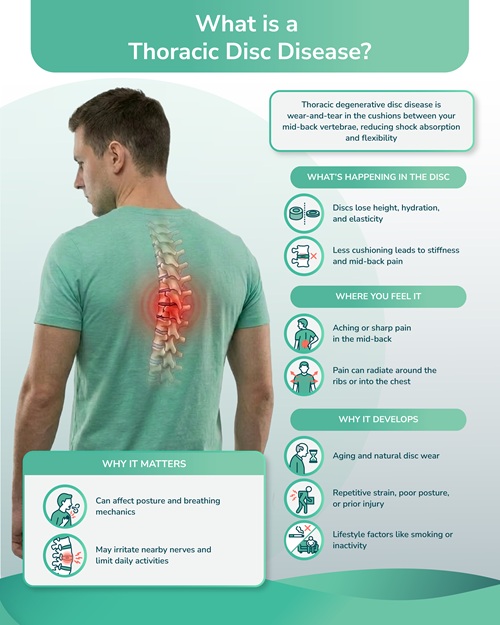
Thoracic degenerative disc disease (DDD) is a condition where the discs in the mid-back gradually deteriorate. These discs act like shock absorbers between your vertebrae. Over time, they lose height, hydration, and elasticity, which reduces cushioning and flexibility. This degeneration can trigger pain, stiffness, and in some cases, nerve irritation that radiates into the ribs or chest.
Unlike lumbar or cervical disc issues, thoracic DDD is less common but can significantly impact posture, breathing mechanics, and overall quality of life if untreated.
Common Causes
- Aging & Natural Wear: Loss of hydration and elasticity is part of the aging process.
- Repetitive Stress & Injuries: Heavy lifting, twisting, or repetitive sports can accelerate wear.
- Genetic Predisposition: Some individuals inherit weaker disc structures.
- Lifestyle Factors: Smoking, poor posture, obesity, and sedentary habits speed up degeneration.
- Other Conditions: Osteoporosis, scoliosis, or spinal trauma may increase risk.
Symptoms
- Persistent mid-back pain, sometimes radiating to ribs or chest.
- Stiffness & reduced mobility, especially after inactivity.
- Numbness, tingling, or weakness if nerve roots are compressed.
- Muscle spasms or tension in the surrounding thoracic region.
- Difficulty sitting or standing upright for long periods.
Diagnosis
- Clinical Evaluation: Review of medical history, posture, and physical exam.
- Imaging: MRI or CT scans to assess disc height, hydration, and nerve compression.
- Neurodiagnostics: Nerve conduction or EMG studies to check for nerve involvement.
- Differential Diagnosis: Rule out cardiac or pulmonary causes for mid-back/chest pain.
Non-Surgical Treatment Options
- Physical Therapy: Improves flexibility, strength, and posture.
- Medications: NSAIDs, muscle relaxants, and pain relievers as needed.
- Lifestyle Adjustments: Ergonomic modifications, weight management, smoking cessation.
- Supportive Aids: Bracing or posture supports in selected cases.
- Alternative Approaches: Acupuncture, yoga, or massage may complement treatment.
Holistiq’s Thoracic Degenerative Disc Disease Recovery Plan
1. Functional & Anti-Inflammatory Nutrition
- Nutrients that preserve disc hydration (omega-3s, collagen-supporting proteins).
- Vitamins D & K for bone-mineral balance.
- Gut-health protocols to lower systemic inflammation.
2. Peripheral Magnetic Stimulation (PMS)
- Non-invasive neuromodulation for deep spinal muscles.
- Reduces nerve-related discomfort and enhances spinal stability.
3. Chiropractic & Manual Therapy
- Gentle decompression and alignment corrections.
- Soft tissue release to reduce tension and restore range of motion.
4. Image-Guided Epidural Injections
- Targeted injections for significant inflammation or nerve involvement.
- Minimally invasive; enables faster participation in rehab.
5. Brain-Body Optimization
- Transcranial Magnetic Stimulation (TMS) for persistent pain or mood symptoms.
- Pain science education, mindfulness, CBT, and breathwork to break the pain cycle
6. Rehabilitation & Functional Reconditioning
- Graduated exercise programs: core stabilization → ergonomic retraining → strengthening.
- Emphasis on posture correction, spinal mobility, and sustainable movement.
When to Consider Surgery
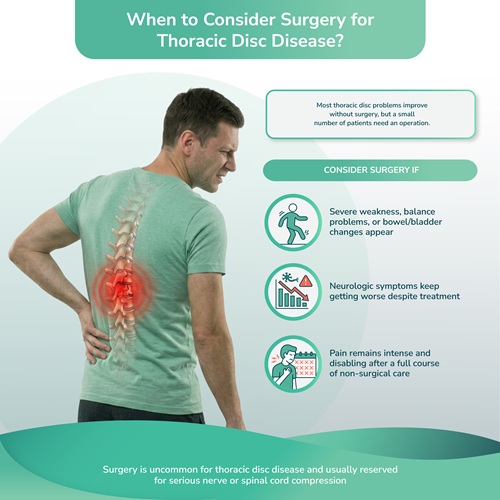
- Severe neurological symptoms (weakness, bowel/bladder changes).
- Progressive loss of function despite non-surgical care.
- Persistent, disabling pain unresponsive to conservative treatment. Note: Surgery is less common in thoracic DDD compared to lumbar cases.
Prognosis & Prevention
- Prognosis: Many patients achieve long-term relief with conservative care and consistent rehab.
- Prevention Tips:
- Maintain a healthy weight.
- Strengthen core and back muscles.
- Practice good posture at work and while sleeping.
- Avoid smoking, which dehydrates discs.
- Stay active with low-impact activities like swimming or walking.
Thoracic Degenerative Disc Disease FAQs
Is surgery common for thoracic DDD?
No, most cases improve with non-surgical care.
Does exercise help?
Yes, targeted rehab can reduce pain and restore function.
Is thoracic degenerative disc disease common?
It’s less common than lumbar or cervical degeneration, but risk increases with age and lifestyle factors.
Can degenerative disc disease heal on its own?
The degeneration itself doesn’t reverse, but symptoms can often be significantly improved.
How can I prevent further disc degeneration?
Stay active, maintain a healthy lifestyle, and follow a structured recovery plan.
Why Choose Holistiq?
At Holistiq, we combine advanced medical technology with holistic wellness strategies. Every recovery plan is customized to balance pain relief, functional restoration, and long-term prevention—helping you reclaim quality of life without unnecessary interventions.
The Road to Recovery Begins with Holistiq
Thoracic degenerative disc disease doesn’t have to mean living with chronic pain. With early intervention, personalized care, and proactive lifestyle changes, you can protect your spine, reduce symptoms, and return to the activities you love.
Where Does It Hurt? We Can Help.