Comprehensive Guide to Thoracic Spinal Stenosis
Non-Surgical Treatments and Holistiq’s Approach
Thoracic stenosis can significantly impact quality of life, but many individuals can avoid surgery with modern, holistic options. This guide explores what thoracic stenosis is, its causes and symptoms, methods of diagnosis, and non-surgical treatments—highlighting Holistiq’s advanced recovery plan.
What Is Thoracic Spinal Stenosis?
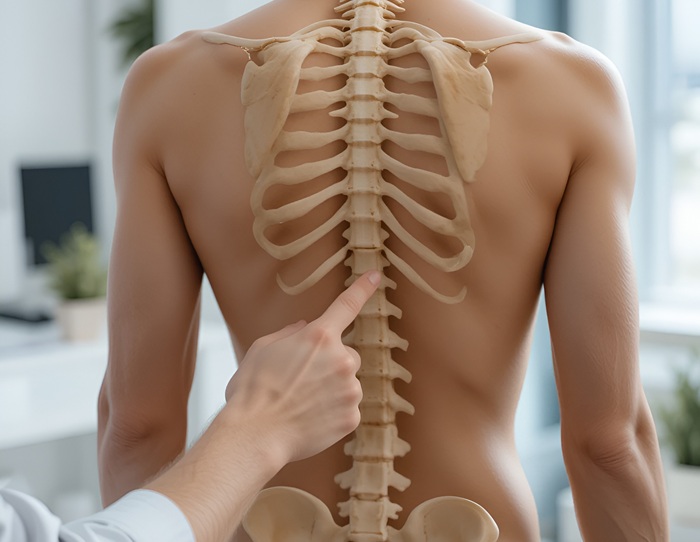
Thoracic stenosis refers to the narrowing of the spinal canal in the thoracic (mid-back) region, which can compress the spinal cord and nerves. This compression can lead to pain, numbness, and even functional impairment. It is less common than cervical (neck) or lumbar (lower back) stenosis but can be equally disabling.
Common Causes of Thoracic Stenosis
- Degenerative changes: Age-related arthritis and disc wear.
- Herniated discs: Bulging discs pressing on nerve tissue.
- Osteophytes: Bone spurs from joint degeneration.
Thickened ligaments: Ligamentum flavum hypertrophy. - Congenital factors: Born with a smaller spinal canal.
- Trauma: Vertebral fractures, spinal injuries.
Symptoms of Thoracic Stenosis
- Mid-back pain or aching
- Pain radiating around the chest or abdomen
- Numbness or tingling in the torso or legs
- Weakness in the legs
- Difficulty walking or changes in gait
- Balance problems
- In severe cases: Bowel or bladder dysfunction

How Is Thoracic Stenosis Diagnosed?
Clinical Evaluation:
- History: Assess pain radiation and any motor/sensory changes.
- Physical tests: Spurling’s maneuver and shoulder abduction relief test.
- Reflex testing: Biceps (C5), brachioradialis (C6), triceps (C7) to assess nerve involvement.
Imaging:
- MRI (Preferred): Reveals disc bulges, foraminal narrowing, and spinal cord compression.
- CT/Myelogram: Used if MRI is not possible or for postoperative assessment.
- X-rays: Identify alignment issues, disc space loss, and bone spurs.
Neurodiagnostics:
- EMG/NCS: Electromyography and nerve conduction studies help confirm radiculopathy or distinguish between brachial plexus and peripheral nerve involvement.

Non-Surgical Treatment Options
Most cases improve with conservative care rather than surgery:
- Physical therapy: Targeted exercises to strengthen and mobilize muscles, improve posture, and relieve nerve pressure.
- Medications: NSAIDs, anticonvulsants (for nerve pain), and sometimes corticosteroids to reduce pain and inflammation.
- Transcutaneous electrical nerve stimulation (TENS)/Peripheral Magnetic Stimulation: Non-invasive therapies for pain management and muscle reactivation.
- Manual therapy: Chiropractic adjustments, traction, and myofascial release for decompression and better mobility.
- Image-guided injections: Corticosteroid injections or nerve blocks for targeted pain relief.
- Lifestyle modification: Ergonomic advice, weight management, and functional reconditioning.
Holistiq’s Cervical Spinal Stenosis Recovery Plan
Holistiq uses a multi-disciplinary strategy that combines evidence-based medicine and cutting-edge technology for recovery:
Functional & Anti-Inflammatory Nutrition
- Personalized meal plans rich in omega-3s, magnesium, turmeric, and antioxidants.
- Focus on reducing systemic inflammation and promoting gut and hormonal balance.
Peripheral Magnetic Stimulation (PMS)
- Personalized meal plans rich in omega-3s, magnesium, turmeric, and antioxidants.
- Focus on reducing systemic inflammation and promoting gut and hormonal balance.
Chiropractic & Manual Therapies
Gentle spinal adjustments, traction, cervical decompression, myofascial release, and active mobilization techniques.
Image-Guided Injections
- Facet joint or epidural steroid injections guided by imaging for precision pain relief.
Brain-Body Optimization
- Transcranial Magnetic Stimulation (TMS) for chronic pain and mood support.
- Pain neuroscience education, mindfulness, cognitive behavioral therapy (CBT), and breathwork.
Rehabilitation & Functional Reconditioning
- Targeted exercises: Cervical isometrics, deep neck flexor training, nerve glides, and scapular retraining.
- Return-to-function pathway with ergonomic advice for daily life and work optimization.

When to Consider Surgery
Surgery may be necessary if:
- Symptoms progress despite comprehensive conservative therapy.
- There is evidence of spinal cord compression with neurological deficits.
- The patient experiences severe or worsening muscle weakness, loss of coordination, or bowel/bladder dysfunction.
Thoracic Spinal Radiculopathy FAQs
What are early signs of thoracic radiculopathy?
Band-like chest/back pain, tingling, or weakness—especially if worsening.
Can it be managed non-surgically?
Yes—for most, comprehensive conservative care yields substantial improvement.
How long does recovery take?
Mild cases: weeks; complex cases: several months with consistent therapy.
Is imaging needed?
MRI or CT scans are often vital for accurate diagnosis and planning.
What makes Holistiq unique?
Integration of medical, nutritional, psychological, and advanced physical therapies for whole-person, lasting healing.
Why Holistiq?
- Personalized, data-driven care plans
- Integration of medical, nutritional, and physical therapies
- Innovative technologies (PMS, TMS, image-guided interventions)
- Emphasis on holistic, patient-centered healing and long-term lifestyle optimization
Contact Holistiq Spine & Orthopaedic
Thoracic stenosis does not have to mean invasive surgery or years of discomfort. Non-surgical, whole-person care—like that provided by Holistiq—can empower patients to recover mobility, strengthen resilience, and return to a more active, pain-free life. Always consult with a spine specialist to confirm diagnosis and discuss which nonsurgical options are best tailored to your individual needs.
Where Does It Hurt? We Can Help.