
Types, Uses, and Integrative Pain Management Approaches

Knee pain is a prevalent condition affecting people of all ages, stemming from various causes such as osteoarthritis, overuse, injury, or inflammatory conditions. While physical therapy, lifestyle changes, and medication are often first-line treatments, knee injections can provide targeted relief when conservative measures fall short. This blog post explores the different types of knee injections, when they are appropriate, and how they can be used alongside other pain management modalities like shockwave therapy, anti-inflammatory nutrition, chiropractic care, medication, and bracing.
Types of Knee Injections
1. Corticosteroid Injections
Corticosteroids, or “steroid injections,” are the most commonly used knee injections. These powerful anti-inflammatory agents reduce swelling, pain, and stiffness in the knee joint.
- Ideal For: Osteoarthritis, rheumatoid arthritis, gout flares, and severe inflammation.
- Duration of Relief: Several weeks to a few months.
- Limitations: Repeated use (more than 3-4 times per year) can lead to cartilage thinning and joint damage.
2. Hyaluronic Acid Injections (Viscosupplementation)
Hyaluronic acid is a natural component of synovial fluid that lubricates and cushions joints. These injections aim to supplement the knee’s natural fluids.
- Ideal For: Mild to moderate osteoarthritis, particularly in patients not responding to corticosteroids.
- Duration of Relief: Several months, often used as a second-line treatment.
- Limitations: Variable effectiveness; not all patients experience relief.
3. Platelet-Rich Plasma (PRP) Injections
PRP therapy uses the patient’s own blood, spun down to concentrate platelets and growth factors, which are then injected into the knee.
- Ideal For: Early arthritis, ligament sprains, meniscal injuries, and tendinopathies.
- Duration of Relief: Long-term relief (6–12 months) in many patients.
- Benefits: Regenerative potential with minimal risk of adverse reaction.
- Limitations: Not covered by most insurance; effects vary between individuals.
4. Stem Cell Injections
Stem cells, often derived from bone marrow or adipose tissue, may help regenerate cartilage and repair tissue damage in the knee.
- Ideal For: Younger, active patients with early osteoarthritis or cartilage defects.
- Duration of Relief: Varies; still under investigation in large-scale clinical trials.
- Limitations: Expensive and mostly experimental in the U.S.; evidence still emerging.
5. Genicular Nerve Blocks and Radiofrequency Ablation (RFA)
These injections target the sensory nerves around the knee joint to block pain transmission.
- Ideal For: Chronic knee pain, especially post-surgical or non-surgical osteoarthritis pain.
- Duration of Relief: Nerve blocks last days to weeks; RFA can last 6–12 months.
- Limitations: Typically used when other injections are ineffective or not tolerated.
When Are Knee Injections Appropriate?
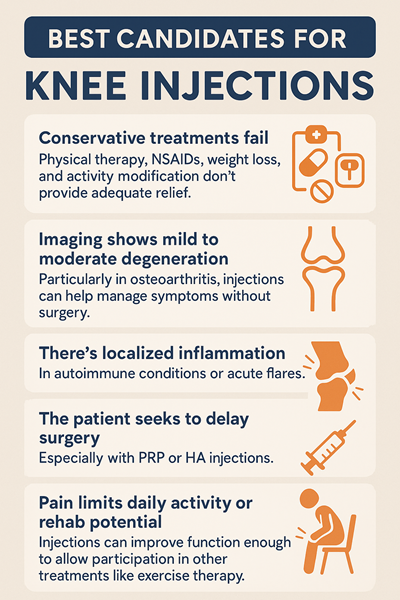
Knee injections are not typically the first step in treatment. They are most appropriate when:
- Conservative treatments fail: Physical therapy, NSAIDs, weight loss, and activity modification don’t provide adequate relief.
- Imaging shows mild to moderate degeneration: Particularly in osteoarthritis, injections can help manage symptoms without surgery.
- There’s localized inflammation: In autoimmune conditions or acute flares.
- The patient seeks to delay surgery: Especially with PRP or HA injections.
- Pain limits daily activity or rehab potential: Injections can improve function enough to allow participation in other treatments like exercise therapy.
.
When Other Treatments Are More Appropriate
There are cases where injections may not be the best option:
- Severe joint degeneration: When bone-on-bone arthritis is present, injections are less effective and joint replacement may be warranted.
- Joint infection or skin infection at injection site: Absolute contraindications for injection therapy.
- Uncontrolled diabetes: Corticosteroids can spike blood sugar levels and may not be suitable.
- Failed response to multiple prior injections: Suggests diminishing returns and the need to explore alternatives.
Integrative Pain Management: Combining Injections with Other Modalities
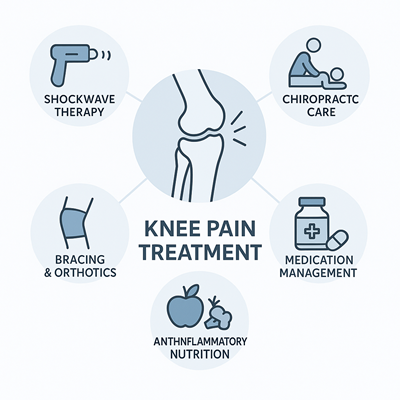
To maximize the effectiveness of knee injections and promote long-term function, many pain management clinics adopt a multidisciplinary approach. Here’s how various complementary treatments fit into the picture:
Also known as extracorporeal shockwave therapy (ESWT), this treatment uses acoustic waves to stimulate healing in soft tissues.
- Used for: Tendinopathies, patellar tendonitis, and chronic inflammation.
- How it works with injections: Enhances tissue healing following PRP or steroid injections.
3. Anti-Inflammatory Nutrition
A diet rich in omega-3 fatty acids, antioxidants, and low-glycemic foods can reduce systemic inflammation.
- Used for: Supporting long-term pain relief, particularly in osteoarthritis.
- How it complements injections: Minimizes inflammatory recurrence and supports joint health over time.
Focused on improving joint mechanics, alignment, and neuromuscular control.
- Used for: Mechanical knee pain, referred pain from the spine, and gait imbalances.
- In conjunction with injections: Helps address biomechanical contributors to knee dysfunction.
NSAIDs, muscle relaxants, or nerve pain medications may be used adjunctively.
- Used for: Flare-ups, breakthrough pain, or as part of a tapering strategy post-injection.
- Considerations: Always weigh the risk of long-term medication use with potential benefits.
Supportive devices can reduce joint load and improve alignment.
- Used for: Medial/lateral compartment arthritis, instability, or meniscal injuries.
- With injections: Improve comfort and reduce mechanical stress during the post-injection period.
Personalized Treatment Planning: The Multimodal Advantage
An effective knee pain treatment strategy isn’t one-size-fits-all. Pain specialists often design personalized programs that include:
- Diagnostic clarity: Imaging and exam findings guide the type of injection and supporting therapies.
- Layered therapy: Using injections to reduce inflammation, followed by rehab or stimulation therapies to restore function.
- Patient education: Addressing biomechanics, nutrition, activity pacing, and compliance to enhance outcomes.
This integrative model not only targets pain relief but also restores mobility and prevents recurrence—making it ideal for active individuals and those hoping to avoid surgery.
Conclusion
Knee injections are a powerful tool in the modern pain management arsenal, offering relief for a variety of knee conditions when used appropriately. Whether it’s corticosteroids for inflammation, hyaluronic acid for lubrication, or regenerative injections like PRP, these treatments can play a key role in alleviating pain and improving quality of life.
However, injections are most effective when combined with a broader, integrative approach that addresses the root causes of pain and supports overall joint health. By incorporating modalities such as shockwave therapy, peripheral magnetic stimulation, chiropractic care, anti-inflammatory nutrition, medication, and bracing, patients can achieve more comprehensive and lasting results.
If you’re struggling with knee pain and want to explore your options, consult a multidisciplinary pain management clinic that offers personalized care and a wide range of therapeutic solutions.