
Meniscus Tear Symptoms, Causes Treatment
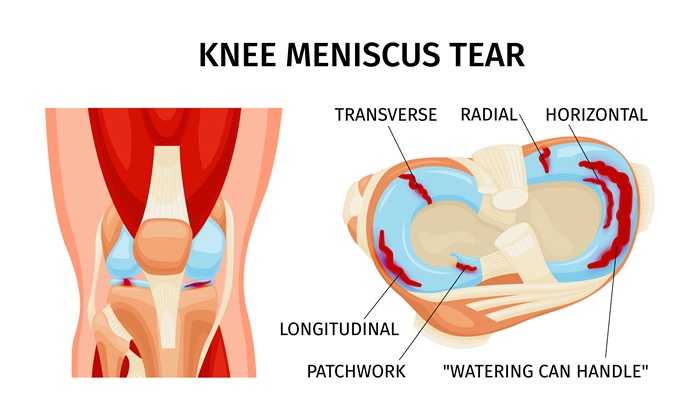
Comprehensive evaluation & evidence-based therapies
Meniscus tears are among the most frequently encountered knee injuries, affecting everyone from athletes to adults living active lifestyles or those with age-related degeneration. At Holistiq® Spine & Orthopaedic Clinic, comprehensive evaluation and evidence-based therapies empower patients to heal, avoid unnecessary surgery, and regain optimal knee function—no matter the cause of injury.
Understanding the Meniscus
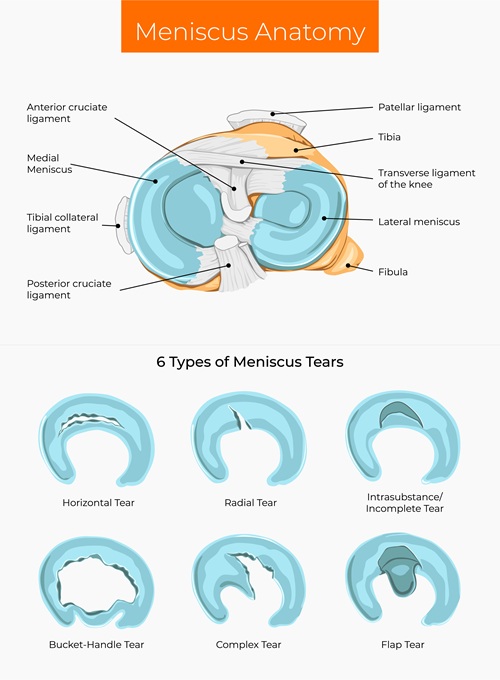
The meniscus is a C-shaped wedge of cartilage within each knee joint, positioned between the femur and tibia. Each knee has two menisci—the medial (inside) and lateral (outside)—which absorb shock, stabilize the joint, and distribute weight across the knee. These structures are critical for smooth, pain-free motion and for protecting the knee from early arthritis.
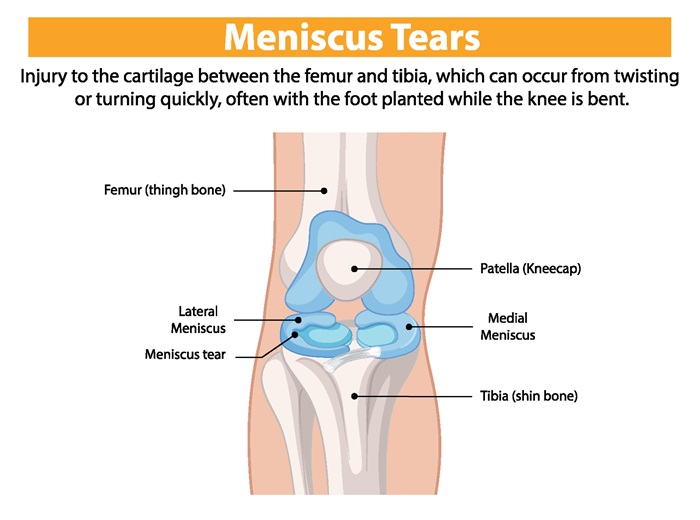
Causes of Meniscus Tears
Meniscus injuries fall into two primary categories: traumatic and degenerative.
Traumatic Tears
- Common in younger adults and athletes
- Result from a sudden twist, turn, or impact—often during high-demand sports like soccer, basketball, or skiing
- Often involve a rapid knee rotation while the foot is planted
- Frequently occur alongside ligament injuries, especially the ACL
Degenerative Tears
More frequently seen in adults over 40 or those with underlying osteoarthritis
Result from gradual cartilage weakening and thinning due to age-related wear
Even simple actions like squatting or getting up from a chair can trigger a tear in compromised meniscus tissue
Symptoms of a Meniscus Tear
Symptom severity and presentation depend on the size, location, and severity of the tear, but common signs include:
- Sharp or aching pain within the knee
- Swelling that develops over hours or days
- Catching, popping, or locking sensation within the joint
- Stiffness and limited ability to fully bend or straighten the knee
- Feeling the knee is “giving way” or unstable
- Difficulty squatting, twisting, or bearing weight
- Complete inability to straighten the leg, or the knee getting locked in one position (a sign of severe/unstable tear)
- Immediate swelling usually suggests a more significant tear or associated ligament injury, while mild, delayed swelling is more common in degenerative tears.
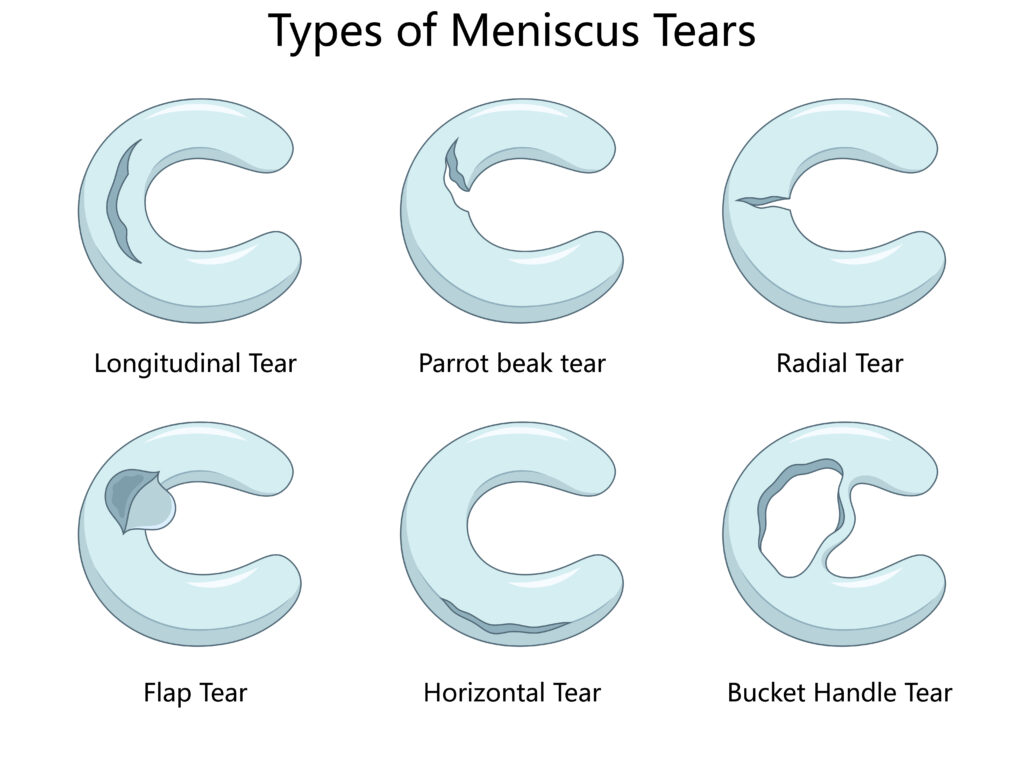
Types of Meniscus Tears
The specific tear pattern has implications for healing and treatment:
- Longitudinal/Vertical: Often repairable, commonly seen in athletes.
- Radial: Extends from the inner edge loosely, less repairable.
- Horizontal: More common with degeneration or chronic wear.
- Complex: Combination, often in older or arthritic patients.
- Bucket handle: Large fragment flipping into the joint, causing locking and urgent symptoms.
- Healing potential depends on whether the tear is in the “red zone” (outer third, better blood supply) or the “white zone” (inner two-thirds, poor blood supply and limited healing).
Diagnosis at Holistiq®
Accurate diagnosis is essential for effective, personalized care. At Holistiq®, our clinicians follow a systematic process:
- Detailed Clinical History: Assessment of injury circumstances, symptom onset, activity level, and pre-existing conditions.
- Physical Examination: Tests such as the McMurray and Thessaly maneuvers, checking for joint line tenderness, swelling, range of motion, and mechanical symptoms.
- Diagnostic Imaging:
- Digital X-rays rule out bone fractures or arthritis.
- MRI provides the gold standard for visualizing meniscus integrity, tear type, and associated soft tissue injuries.
- Ultrasound may be used to assess for effusion or assist in guided therapies.
- This comprehensive assessment guides an individualized care plan focused on patient goals, tear type, and activity needs.
Conservative/Nonsurgical Treatment
Most meniscus tears—especially small, stable, or degenerative types—respond well to a conservative, evidence-based protocol:
- Rest and Activity Modification: Reducing activities that stress the knee promotes healing. Temporary use of crutches or knee brace may be recommended.
- Ice, Compression, Elevation: Controls swelling and pain (RICE principles).
- Medication: NSAIDs and/or topical creams manage pain and inflammation, supporting recovery.
- Physical Therapy: Core to all non-surgical care; therapists prescribe personalized exercises restoring strength, flexibility, balance, and knee stability. Focus is given to building quad and hamstring strength to support the joint.
- Movement Restoration: Functional strength routines, balance training, and supervised athletic progression to prevent recurrence.
- Weight Management/Inflammatory Nutrition: Reduces strain on the knee and promotes natural healing. Dietary counseling supports optimal tissue repair.
Regenerative Medicine (PRP, Cell Therapy): In selected cases, injectable therapies using the body’s own growth factors or stem cells may promote meniscal healing (especially for chronic or degenerative tears). - Many patients achieve full recovery in 4–8 weeks for minor tears, while larger or degenerative tears may require longer and continued therapy.
Surgical Treatment Options
Surgery is considered if:
- Symptoms persist despite conservative management
- Knee is locked (inability to straighten fully)
- Tear is large, unstable, or in a repairable zone
- Active individuals desire a rapid return to high-demand activities
- Common procedures include:
- Arthroscopic Partial Meniscectomy: Removal of torn and unstable meniscus fragments. Faster recovery, but more loss of meniscal tissue may raise future arthritis risk.
- Meniscal Repair: Stitching the tear back together for healing. Preferred for young, active patients with tears in the vascular region. Longer recovery, but preserves meniscus.
- Meniscus Transplant: Reserved for severe cases with significant loss of cartilage in carefully selected patients.
- Arthroscopic surgery is minimally invasive, usually performed outpatient, and is followed by guided rehabilitation for optimal outcomes.
Preventing Meniscus Tears and Recurrence
- Warm up and stretch before activity
- Maintain strong thigh, hamstring, and core muscles
- Focus on joint-friendly exercises (swimming, cycling)
- Avoid deep squats, abrupt pivots, or excessive knee twisting
- Maintain a healthy body weight and listen to pain/warning symptoms
Frequently Asked Questions
How do I know if my meniscus tear needs surgery?
Surgical evaluation is advised if the knee locks, cannot be straightened, or pain and swelling persist after 4–6 weeks of therapy.
Can a meniscus tear heal on its own?
Minor tears in the vascular zone may heal with conservative care. Degenerative and some complex tears often require long-term management or surgery.
What is recovery time after surgery?
Partial meniscectomy allows return to function in a few weeks; repair requires a more cautious 3–6 month rehab.
Are there risks with not treating a tear?
Untreated large or unstable tears can worsen, increase arthritis risk, or cause chronic instability and pain.
Does Holistiq® offer advanced meniscus treatments?
Yes. Our team offers regenerative medicine, image-guided injections, and close coordination with orthopedic surgeons for advanced therapies and surgical options.
Take the First Step Toward Knee Health
If you’re suffering from knee pain or suspect a meniscus injury, the team at Holistiq® Spine & Orthopaedic Clinic is ready to help. Comprehensive diagnostics, evidence-based treatment, and compassionate care support your fastest and most complete recovery. Book your evaluation today and get back to what you love—pain-free.