
Patellar Tendonitis Symptoms, Causes & Treatment

Overcome Tendon Pain & Restore Strength
Patellar tendonitis, commonly known as jumper’s knee, is a frustrating and often persistent condition impacting athletes, fitness enthusiasts, and anyone whose activities demand repetitive jumping or knee extension. At Holistiq® Spine & Orthopaedic Clinic, we utilize advanced diagnostics, holistic therapy, and multi-modal rehabilitation plans to help patients overcome tendon pain, restore strength, and get back to doing what they love.
Understanding Patellar Tendonitis
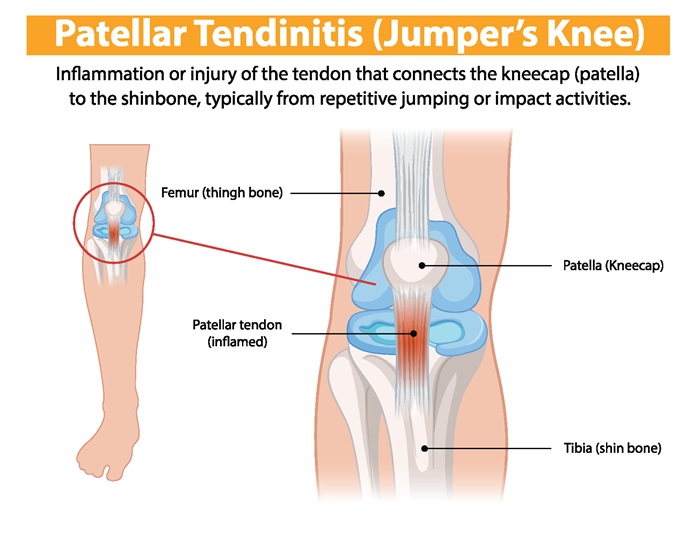
Patellar tendonitis is an overuse injury that results from repeated stress and tiny tears in the patellar tendon—the strong band of tissue connecting your kneecap (patella) to your shinbone (tibia) and playing a crucial role in knee extension and jumping. While especially common in sports such as basketball, volleyball, and track, anyone can develop this condition with excessive jumping, running, or explosive movements.
Causes and Risk Factor
Patellar tendonitis develops when the tendon is subject to more stress than it can recover from. Key factors include:
- Repetitive jumping or running on hard surfaces
- Sudden increase in training intensity, frequency, or duration
- Poor training technique, inadequate warm-up, or muscle imbalances
- Tight or inflexible quadriceps and hamstrings
- Weakness in glute or core muscles
- Inadequate footwear or improper support during exercise
- Previous knee injury, chronic illness, or underlying structural issues
- Athletes in jumping or sprinting sports, as well as those returning from a period of inactivity too quickly, are especially at risk.
Symptoms
Symptoms of patellar tendonitis often start gradually and worsen over time if left unaddressed:
- Pain and tenderness below the kneecap, especially during activity
- Stiffness with movement after rest
- Pain during jumping, squatting, or climbing stairs
- Swelling or thickening near the tendon
- Weakness or loss of strength in the knee or leg
- Discomfort with kneeling or pressing on the tendon
- Early symptoms are typically mild but can become severe enough to limit sports or even everyday activities.
Diagnosis at Holistiq®
Our comprehensive diagnostic approach helps identify patellar tendonitis and rule out other causes of anterior knee pain:
- Detailed History & Examination: Review of sports participation, training history, previous injuries, and specific symptom patterns. Palpation and movement tests isolate tenderness and functional limitations.
- Imaging: Digital X-rays (to exclude bone abnormalities), ultrasound (for structural tendon changes and inflammation), or MRI (for complex or persistent cases).
Accurate diagnosis allows targeted, efficient treatment and prevents chronicity.
Holistiq® PFPS Relief & Recovery Program
Our integrated, stepwise approach addresses both symptoms and causes of PFPS:
1. Acute Symptom Relief
- Temporary rest from aggravating activities (high-impact or repetitive knee-bending)
- Ice application after activity to minimize pain and swelling
- Use of NSAIDs for short-term pain/inflammation relief, if needed
- Soft compressive knee sleeves or taping for additional support
2. Physical Therapy & Functional Rehabilitation
- Targeted Strengthening: Focus on quadriceps and hip abductors—especially the gluteus medius—to improve kneecap tracking
- Stretching Exercises: Address tight iliotibial band, hamstrings, and calves for better movement
- Movement Retraining: Working with therapists to refine gait, landing mechanics, and proper knee alignment during squats and stairs
- Balance and Proprioception: Stability exercises address neuromuscular control deficits common in PFPS
- Manual Therapy: Joint and soft tissue mobilizations as needed
3. Anti-inflammatory Nutrition & Weight Optimization
Nutrition plays a crucial role in controlling inflammation, facilitating tissue repair, and supporting overall joint health:
- Emphasize lean protein, whole grains, fruits/vegetables, nuts, seeds, and omega-3-rich fish
- Incorporate anti-inflammatory foods: berries, leafy greens, turmeric, ginger, and olive oil
- Limit processed foods and refined sugars
- Guidance on healthy weight management, as excess body weight increases knee stress
4. Custom Orthotics & Foot Mechanics
Evaluate for flat feet or poor foot alignment; custom orthotics or supportive shoes may improve knee biomechanics
5. Activity Modification & Education
- Cross-training with low-impact activities (cycling, swimming, elliptical) during recovery
- Gradual return to higher-level sports as pain and function improve
- Comprehensive patient education on ergonomics, technique, and recurrence prevention
4. Regenerative & Advanced Therapies
For persistent or recurrent cases, additional modalities may be recommended:
- Shockwave Therapy: May accelerate healing in chronic PFPS
- Image-guided Injection (rare): In select severe cases, injection treatment may reduce pain and support rehab
- Surgery is rarely needed, reserved only for cases with structural joint abnormalities or failed conservative care.

Preventing Patellofemoral Pain
- Warm up before sports, stretch key muscle groups
- Gradually increase exercise intensity and volume
- Address muscle imbalances with regular strength and flexibility routines
- Maintain a healthy weight and stay hydrated
- Use proper technique—consult a professional for running or lifting form if needed
Frequently Asked Questions
How long does Patellofemoral Pain Syndrome take to heal?
Mild cases improve in weeks, while persistent/recurrent pain may require several months of integrated rehab.
Can I exercise with Patellofemoral Pain Syndrome?
Yes, but focus on pain-free, low-impact activities and avoid aggravating movements. Follow your therapist’s guidance.
Are knee braces helpful?
Soft sleeves or taping may provide short-term support, but exercise therapy is most important for lasting relief.
How do I prevent PFPS from coming back?
Regular strength training, movement retraining, and using supportive shoes are key. Pay attention to pain warning signs!
Will I need surgery?
Surgery is extremely rare for PFPS; most people recover fully with dedicated conservative care.
Take the First Step Toward Relief
Don’t let patellofemoral pain keep you sidelined. Holistiq® Spine & Orthopaedic Clinic specializes in advanced assessment, holistic care, and personalized rehabilitation for all types of knee pain. Schedule an evaluation and get expert, compassionate support for a pain-free, active future.