
Hip Pain in Athletes: Common Sports Injuries, Treatments & Recovery
Hip Pain
- Hip Pain Overview
- Avascular Necrosis
- Bursitis
- Gluteal Tendinopathy
- Pain by Activity (Walking, Running, Sitting, Sleeping)
- Pain in Athletes
- Pain in Older Adults
- Pain by Location (Front, Side, Rear)
- Iliopsoas Pain
- Impingement Syndrome
- Labral Tear
- Osteoarthritis
- Pain After Hip Replacement
- Piriformis Syndrome
- Snapping Hip Syndrome
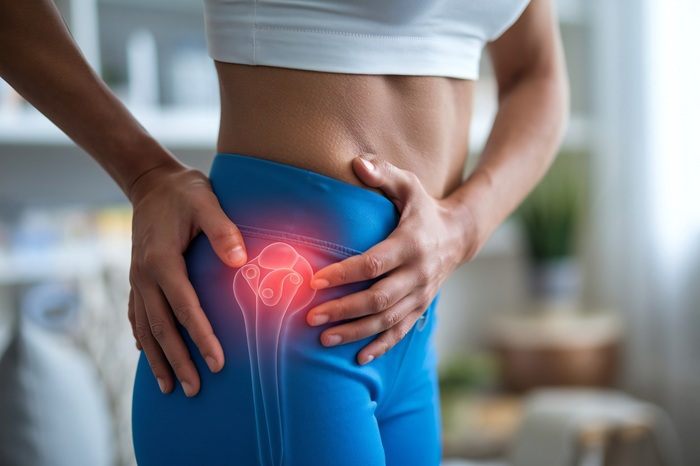
What Causes Hip Pain in Athletes?
Athletes experience hip pain for many reasons, with causes ranging from overuse and muscle strains to structural joint issues and acute injury. High-impact, twisting, or repetitive sports place unique stresses on the hip joint, leading to injuries that may be subtle but can sideline performance if untreated.
Most Common Diagnoses
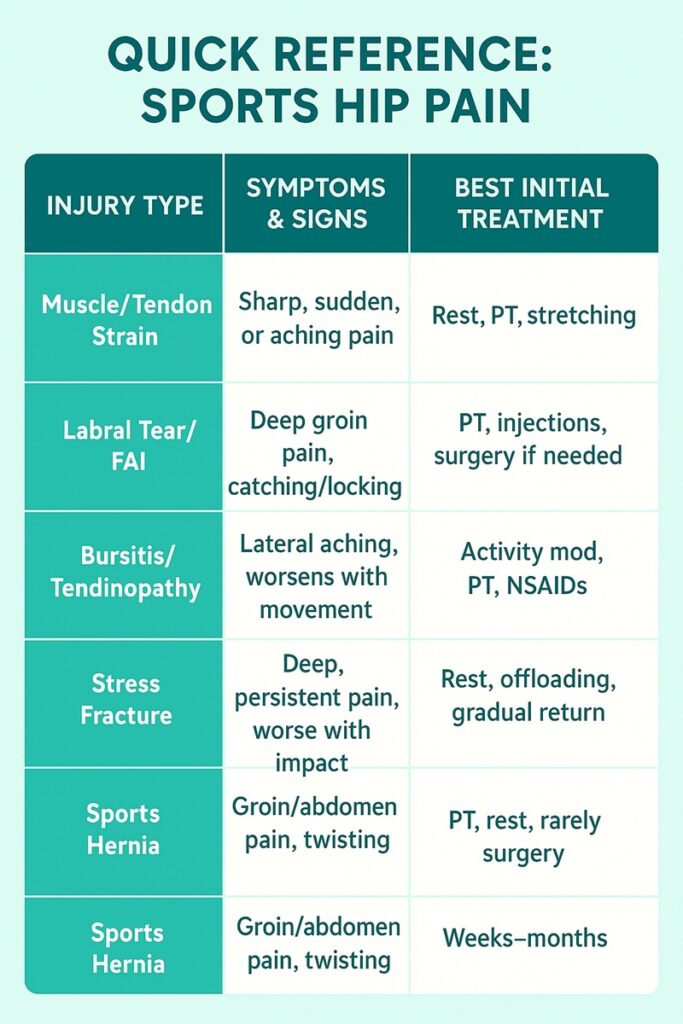
- Muscle/Tendon Injuries: Strains of the hip flexors, hamstrings, or groin (adductors) frequently occur with sprinting, kicking, or sudden movement.
- Labral Tears & Femoroacetabular Impingement (FAI): Repetitive hip motion or abnormal bone structure can damage joint cartilage, causing pain, catching, or locking, especially in young athletes.
- Hip Flexor Strain: Sharp pain in the front of the hip after intense activity; worsens with running, squats, or kicking.
- Hip Bursitis or Tendinopathy: Aching, lateral hip pain from repetitive movement, especially running or cycling.
- Hip Stress Fracture: Endurance athletes—especially runners—may develop deep, worsening pain requiring early detection.
- Osteoarthritis: While less common in youth, joint wear can develop from repeated trauma over years.
- Core Muscle Injury/Sports Hernia: Groin or abdominal pain worsened by twisting.
Piriformis - Syndrome/Sciatica: Deep buttock pain or radiating symptoms from nerve entrapment.
How Do You Treat Athletic Hip Pain?
Most cases recover with conservative care:
- Rest and Activity Modification: Reducing overuse and allowing healing
- Physical Therapy: Correcting muscle imbalances, strengthening core and glutes, targeted stretching, and retraining movement patterns
- NSAIDs/Ice: For short-term swelling and pain management
- Injections: Corticosteroids or PRP in persistent cases; rarely required first-line
- Gradual Return to Play: Sports-specific rehab with close monitoring of symptoms
- Minimally invasive procedures (arthroscopy) often allow high return-to-sport rates
- Surgery: Reserved for severe injuries (large labral tears, hip impingement not responsive to therapy, unstable stress fractures)
Will I Return to My Sport? What’s the Prognosis?
- Muscle or Minor Tendon Strains: Most heal in 2–6 weeks with rest and rehab
- Labral Tears/FAI: Conservative care helps many; surgery may be needed for return to high activity, with high success rates
- Stress Fractures: Require 6–12 weeks+ off high-impact activity, with gradual safe return
- Chronic Conditions (arthritis, overuse): These require ongoing management, but modification and proactive care can extend athletic longevity
- Early Intervention: The sooner the right diagnosis and rehab begins, the higher the chance of a full recovery and prevention of future injury
Why Choose Holistiq Spine & Orthopaedic
Holistiq integrates sports medicine expertise with advanced diagnostics, targeted rehab, and innovative treatments tailored to athletes of every level. Our proactive approach helps speed safe return-to-play, prevent recurrence, and optimize lifetime hip health.
End Your Hip Pain and Get Back in the Game
Don’t let hip pain sideline your goals. Schedule your expert evaluation with Holistiq Spine & Orthopaedics for personalized recovery and a plan to keep you active, strong, and confident in your sport.
Let us help to restore your quality of life. Book a personalized evaluation today.
Where Does It Hurt? We Can Help.






Hip Pain
- Hip Pain Overview
- Avascular Necrosis
- Bursitis
- Gluteal Tendinopathy
- Pain by Activity (Walking, Running, Sitting, Sleeping)
- Pain in Athletes
- Pain in Older Adults
- Pain by Location (Front, Side, Rear)
- Iliopsoas Pain
- Impingement Syndrome
- Labral Tear
- Osteoarthritis
- Pain After Hip Replacement
- Piriformis Syndrome
- Snapping Hip Syndrome