
Avascular Necrosis of the Hip: Diagnosis and Comprehensive Treatment Options
Hip Pain
- Hip Pain Overview
- Avascular Necrosis
- Bursitis
- Gluteal Tendinopathy
- Pain by Activity (Walking, Running, Sitting, Sleeping)
- Pain in Athletes
- Pain in Older Adults
- Pain by Location (Front, Side, Rear)
- Iliopsoas Pain
- Impingement Syndrome
- Labral Tear
- Osteoarthritis
- Pain After Hip Replacement
- Piriformis Syndrome
- Snapping Hip Syndrome
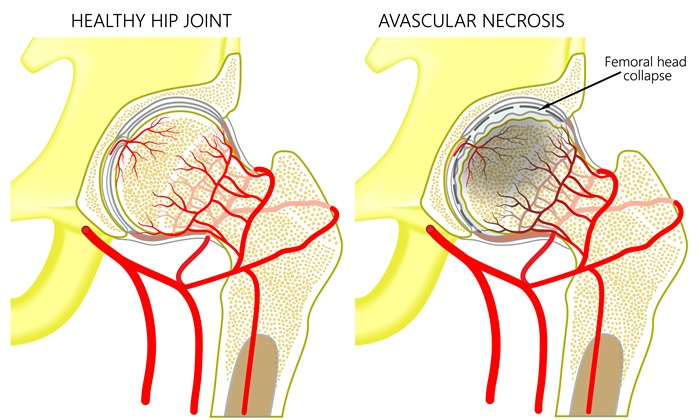
What Is Avascular Necrosis(Osteonecrosis) and Who Is at Risk?
Avascular necrosis (AVN), also called osteonecrosis, is a serious condition in which bone tissue dies due to a lack of adequate blood supply. When blood flow to a bone is interrupted, the tissue begins to collapse and can lead to joint dysfunction, severe pain, and arthritis—commonly affecting the hip, but also the knees, shoulders, and other joints.
Common Triggers & Risk Factors for Avascular Necrosis
- Trauma: Hip dislocation, fractures, or joint injury can block blood flow and trigger AVN.
- Long-term corticosteroid use: Associated with higher lipid levels that block blood supply to bone.
- Excessive alcohol use: Leads to fatty deposits in blood vessels, restricting blood flow.
- Medical conditions: Sickle cell anemia, lupus, diabetes, HIV, pancreatitis, and other chronic diseases.
- Previous radiation/chemotherapy or organ transplantation.
Recognizing Early & Advanced Symptoms of AVN
- Gradually worsening pain in the hip, groin, thigh, buttocks, or sometimes the knee.
- Pain that starts with weight-bearing activity and eventually happens at rest.
- Stiffness, loss of motion, or limping.
- Difficulty with daily movements: Sitting, walking, standing, bending.
- Later stages: Severe pain, joint collapse, and reduced quality of life.
Diagnostic Process
Clinical Evaluation: Diagnosis starts with a review of symptoms, medical history (including steroid use, trauma, and risk factors), and a targeted hip exam. Physicians assess pain location, joint movement, and the ability to bear weight. Early AVN may show pain but minimal stiffness; advanced cases present with joint collapse and limited motion.
Imaging
- X-rays: Detect bone structure changes, joint collapse, and advanced AVN.
- MRI: Best for early detection before X-rays show changes; highlights areas of necrosis, bone edema, and risk of collapse.
- CT scans or bone scans may assist complex cases or staging.
- Imaging also helps rule out other causes and assess disease stage.

Personalized Non-Surgical Treatments for Avascular Necrosis
- Limited weight bearing: Crutches, walker, or cane to protect the affected joint.
- Medications: NSAIDs/acetaminophen for pain; bisphosphonates may help slow bone loss.
- Physical therapy: Focused strengthening, gentle stretching, and exercise adapted to stage.
- Extracorporeal shockwave therapy, magnetic stimulation, and PRP injections (when appropriate).
- Nutritional support: Anti-inflammatory diets reduce progression and support healing.
Holistiq’s Holistic Recovery Plan for AVN
Anti-Inflammatory Nutrition Counseling
Holistiq designs diets rich in omega-3 fats, leafy greens, berries, nuts, and anti-inflammatory spices such as turmeric and ginger—minimizing processed foods and sugars to support bone and joint health.
Shockwave Therapy
Shockwave therapy boosts healing, stimulates bone remodeling, and reduces pain by sending acoustic waves to the affected bone and joint tissue, offering non-invasive support for early and mid-stage AVN
Peripheral Magnetic Stimulation (PMS)
Peripheral magnetic stimulation applies focused electromagnetic fields to affected areas, improving blood flow, stimulating cellular repair, and reducing pain. Studies show improved function and quality of life in AVN patients.
Chiropractic & Manual Therapy
Chiropractic care at Holistiq includes gentle mobilization, alignment correction, and customized exercise plans to manage compensatory pain and protect remaining joint function.
Image-Guided Injections
Procedures range from image-guided joint injections for pain relief to core decompression (minimally invasive technique to restore blood flow and reduce pressure in the bone), PRP (platelet-rich plasma), and early-stage stem cell therapies. These approaches are tailored to disease stage and patient goals.
Brain-Body Optimization
Transcranial magnetic stimulation (TMS) and brain-body therapies help recalibrate pain pathways, improve rehabilitation compliance, and reduce chronic pain. Holistiq guides patients through integrated neuromodulation and mind-body practices for enhanced healing.
Movement Restoration & Rehab
Holistiq offers progressive, stage-based rehab focused on:
- Restoring muscle and joint strength
- Balance and movement control
- Gradual return to functional daily activities and sports Intensive reconditioning follows surgical interventions to maximize hip function.

When Does Surgery Become Necessary for AVN?
Surgery is needed when AVN progresses or causes hip collapse, severe pain, or impaired movement. Procedures may include core decompression, bone grafting, stem cell therapy, osteotomy, or total hip replacement—decided after detailed evaluation and imaging.
FAQs
What is avascular necrosis?
Bone tissue death from disrupted blood supply, resulting in pain and loss of joint function
What causes AVN of the hip?
Trauma, steroids, alcohol, some medical diseases, and sometimes unknown factors.
What are early symptoms?
Mild pain, especially with weight bearing; location may shift from hip to groin, thigh, buttock, or knee.
How is AVN diagnosed?
Clinical exam plus imaging (MRI, X-rays) confirms and stages the condition.
Does AVN always require surgery?
Early-stage AVN can sometimes be managed non-surgically, but late-stage joint collapse requires surgical intervention.
Can nutrition affect AVN?
Diets rich in anti-inflammatory, bone-supporting nutrients help slow progression and support recovery.
Will AVN progress if untreated?
Most cases worsen over time, often leading to joint collapse and advanced arthritis.
Why choose Holistiq for AVN care?
Holistiq offers advanced imaging, minimally invasive procedures, brain-body therapies, and holistic rehab in a patient-first, results-driven environment.
Regain Your Hip Strength With Holistiq
Holistiq Spine & Orthopaedics delivers leading-edge AVN care, integrating expert diagnostics, innovative non-surgical therapies, holistic nutrition, neuromodulation, and advanced rehabilitation—empowering each patient for optimal outcomes.
Ready to Reclaim Hip Comfort and Mobility?
Don’t let avascular necrosis compromise your mobility and comfort. Schedule your personalized evaluation at Holistiq Spine & Orthopaedics to access the most advanced holistic and medical solutions today, and start your journey toward renewed function and pain-free living!
Let us help to restore your quality of life. Book a personalized evaluation today.
Where Does It Hurt? We Can Help.






Hip Pain
- Hip Pain Overview
- Avascular Necrosis
- Bursitis
- Gluteal Tendinopathy
- Pain by Activity (Walking, Running, Sitting, Sleeping)
- Pain in Athletes
- Pain in Older Adults
- Pain by Location (Front, Side, Rear)
- Iliopsoas Pain
- Impingement Syndrome
- Labral Tear
- Osteoarthritis
- Pain After Hip Replacement
- Piriformis Syndrome
- Snapping Hip Syndrome