
Hip Impingement Syndrome: Causes, Symptoms & Modern Recovery Solutions
Hip Pain
- Hip Pain Overview
- Avascular Necrosis
- Bursitis
- Gluteal Tendinopathy
- Pain by Activity (Walking, Running, Sitting, Sleeping)
- Pain in Athletes
- Pain in Older Adults
- Pain by Location (Front, Side, Rear)
- Iliopsoas Pain
- Impingement Syndrome
- Labral Tear
- Osteoarthritis
- Pain After Hip Replacement
- Piriformis Syndrome
- Snapping Hip Syndrome
What Is Hip Impingement?
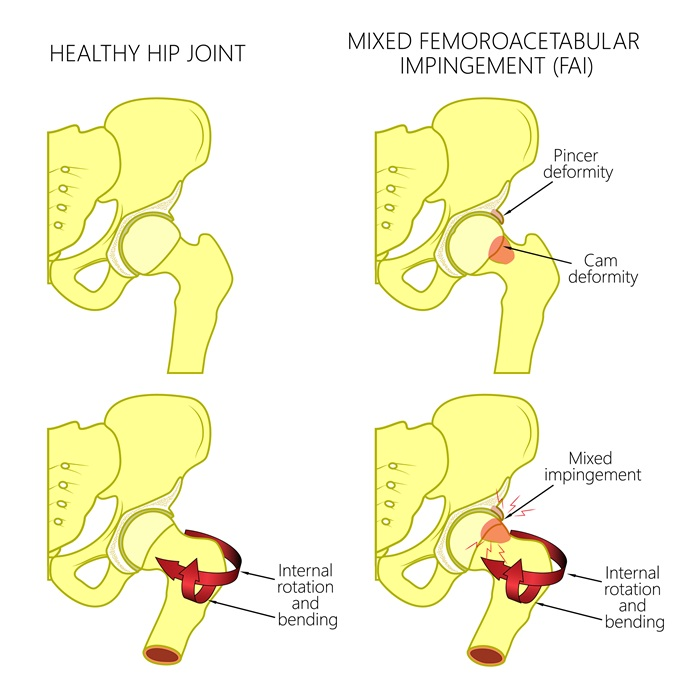
Hip impingement, medically known as femoroacetabular impingement (FAI), occurs when abnormal contact between the ball (femoral head) and socket (acetabulum) of the hip joint leads to friction, pinching, and joint damage. This prevents smooth movement, can cause labral tears, and is often considered a pre-arthritic condition impacting younger, active individuals.
Why Does Hip Impingement Develop?
- Extra bone growth or misshapen femoral head or acetabulum (cam or pincer lesion)
- Childhood hip deformities or abnormal socket development (acetabular retroversion)
- High-impact or repetitive activities in sports, dance, or weightlifting
- Hip dysplasia, underlying arthritis, or previous trauma
- Abnormal femoral rotation, leg length differences, or muscle imbalances
Recognizing the Signs: Symptoms of Hip Impingement
- Groin, hip, or buttock pain worsening with movement, sitting, or sports
- Clicking, locking, catching, or “giving way” of the hip joint
- Stiffness, reduced range of motion, or trouble flexing the hip past a right angle
- Limping or difficulty with stairs, deep squatting, or pivoting
- Pain may start mild and progress with joint damage
How Is Hip Impingement Diagnosed?
Clinical Evaluation: What to Expect:
A detailed medical history is combined with physical tests, such as flexing and rotating the hip (impingement test), to provoke symptoms. Gait, hip range of motion, muscle strength, and signs of labrum involvement are assessed to rule out other causes of hip pain.
Imaging for Hip Impingement:
- X-rays: Show bone shapes, overgrowth, and joint space narrowing
- MRI/MR arthrogram: Reveal labral tears, cartilage damage, inflammation, and subtle bone abnormality
- CT scan: Offers detailed three-dimensional images for complex cases or pre-surgical planning
- Diagnostic injection (under ultrasound or X-ray) confirms pain is from the joint if symptom relief occurs

Non-Surgical Treatment Options: Lasting Relief Without Surgery
- Activity modification and rest for acute relief
- Targeted physical therapy to improve hip strength, flexibility, and movement patterns
- NSAIDs or acetaminophen for pain and inflammation
- Intra-articular injections (corticosteroid or PRP) for resistant pain or diagnostic clarity
- Use of orthotics or taping for biomechanics when needed
- Most cases respond well to a structured, personalized non-surgical plan.
Holistiq Spine & Orthopaedic’s Recovery Plan
Anti-Inflammatory Nutrition Counseling
Customized dietary guidance featuring anti-inflammatory foods—omega-3s, leafy greens, fruits, nuts, olive oil, turmeric, and ginger—helps support joint healing, reduce inflammation, and maintain an optimal recovery environment.
Shockwave Therapy
Shockwave therapy delivers powerful acoustic waves to the hip to break up tight tissues, reduce inflammation, and trigger cellular regeneration—especially effective for persistent soft tissue pain or stiffness.
Peripheral Magnetic Stimulation
Non-invasive magnetic stimulation helps improve local blood flow, reduce pain, and restore hip stability and muscular function—a modern adjunct for active recovery.
Chiropractic Therapy
Chiropractic care addresses pelvic alignment and mobility, provides hands-on tissue release, and corrects compensatory movement patterns contributing to chronic hip impingement.
Procedures for Hip Impingement
- X-ray-guided injections for resistant bursitis or tendon pain
- Minimally invasive removal of loose bodies/joint debris in rare, persistent cases
- Regenerative injections (PRP) for chronic tendon irritation
Brain-Body Optimization (Including TMS Therapy)
Transcranial magnetic stimulation (TMS) and integrated brain-body therapies recalibrate pain pathways, enhance neuromuscular activation, and support comprehensive recovery for chronic or complex cases.
Rehabilitation & Reconditioning
Progressive rehab combines hip and core strengthening, flexibility training, functional movement correction, and safe return-to-sport guidance, all tailored to the individual’s goals and lifestyle.

When Is Surgery Needed?
Surgery is generally needed when non-surgical care fails or joint damage is extensive. The common approach is minimally invasive hip arthroscopy to reshape bone, repair the labrum, or treat associated injuries. Severe deformities may require open correction.
Snapping Hip Syndrome Questions Answered
What is FAI (Femoroacetabular Impingement)?
A condition caused by abnormal contact between the hip’s ball and socket, leading to joint pain and dysfunction.
Can FAI cause arthritis?
Yes, untreated hip impingement increases risk for cartilage damage and early osteoarthritis.
How do I know if hip pain is impingement?
Groin or hip pain with activity, stiffness, and pain in specific hip positions are classic clues—diagnosed with physical exam and imaging.
Can hip impingement heal without surgery?
Many cases respond to physical therapy, nutrition, and lifestyle modification, but severe bone deformities may require surgery.
How long does recovery take?
Mild cases improve in a few weeks; surgical cases require several months for full recovery with rehabilitation.
Is physical therapy necessary?
Yes—targeted rehab corrects poor movement, strengthens, and helps prevent recurrence.
What foods help heal hip impingement?
Anti-inflammatory diets support tissue recovery and overall joint health.
Why choose Holistiq for hip impingement care?
Holistiq unites precision diagnostics, cutting-edge therapies, and stepwise, holistic rehabilitation for optimal and lasting results.
Why Choose Holistiq Spine & Orthopaedics
Experience state-of-the-art diagnostics, expert-guided treatment, and truly personalized care—all under one roof. Holistiq’s unique approach addresses the whole person and accelerates recovery at every stage.
Ready to Move with Confidence?
Don’t let hip pain limit your life. Book a comprehensive evaluation with Holistiq Spine & Orthopaedics for a clear diagnosis and a stepwise plan to restore hip health and whole-body mobility!
Let us help to restore your quality of life. Book a personalized evaluation today.






Hip Pain
- Hip Pain Overview
- Avascular Necrosis
- Bursitis
- Gluteal Tendinopathy
- Pain by Activity (Walking, Running, Sitting, Sleeping)
- Pain in Athletes
- Pain in Older Adults
- Pain by Location (Front, Side, Rear)
- Iliopsoas Pain
- Impingement Syndrome
- Labral Tear
- Osteoarthritis
- Pain After Hip Replacement
- Piriformis Syndrome
- Snapping Hip Syndrome