
Piriformis Syndrome: Sciatic Nerve Pain & Expert Solutions
Hip Pain
- Hip Pain Overview
- Avascular Necrosis
- Bursitis
- Gluteal Tendinopathy
- Pain by Activity (Walking, Running, Sitting, Sleeping)
- Pain in Athletes
- Pain in Older Adults
- Pain by Location (Front, Side, Rear)
- Iliopsoas Pain
- Impingement Syndrome
- Labral Tear
- Osteoarthritis
- Pain After Hip Replacement
- Piriformis Syndrome
- Snapping Hip Syndrome
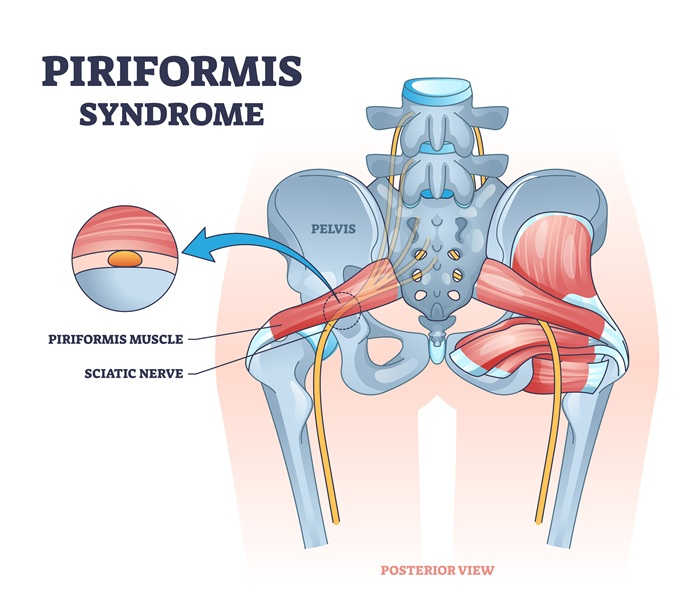
What Is Piriformis Syndrome?
Piriformis syndrome is a neuromuscular condition in which the piriformis muscle—located deep in the buttock—compresses or irritates the nearby sciatic nerve, causing pain, tingling, or numbness that can radiate down the leg. The syndrome can mimic other causes of sciatica and is often triggered by muscle spasms, inflammation, or anatomical variation.
Why Does Piriformis Syndrome Happen?
- Acute or chronic injury to the hip, buttock, or pelvis
- Prolonged sitting or “wallet neuritis”
- Abnormal piriformis muscle or sciatic nerve anatomy
- Muscle imbalances, tightness, or overuse
- Scar tissue after surgery, trauma, or inflammation
- Differences in leg length, spinal abnormalities, or overtraining
- Overexertion from running, climbing, or lifting heavy objects
What Are the Tell-Tale Signs of Piriformis Syndrome?
- Deep aching, burning, or stabbing pain in the buttock
- Sciatica-type pain radiating down the back of the thigh or leg
- Tingling or numbness in the buttock or leg
- Increased pain with sitting, driving, walking, or climbing stairs
- Difficulty sitting or standing for long periods
- Weakness, limping, or reduced range of motion
- Symptoms often worsen with movement or alleviate when lying down
Diagnosing Piriformis Syndrome: The Holistic Approach
In-Depth Clinical Evaluation
A specialized provider will take a detailed symptom history and examine hip, leg, and lower back movements. They will check for tenderness over the muscle, assess gait, and perform specific tests (Freiberg, FAIR, Pace, Beatty) that provoke or relieve symptoms, differentiating piriformis syndrome from spinal or hip disorders.
Imaging: Revealing the Bigger Picture
- Imaging: Revealing the Bigger Picture
- MRI or CT scans: Rule out disc herniations, arthritis, or other structural causes
- Ultrasound: May detect swelling, abnormal muscle, or sciatic nerve position
- X-rays: Exclude bone issues; less useful for soft tissue
- Imaging primarily helps rule out other conditions since piriformis syndrome is a clinical diagnosis.
Neurodiagnostics: Advanced Testing
Nerve conduction studies or EMG: Useful if symptoms are atypical or severe, or to rule out nerve compression elsewhere on the sciatic nerve. Such studies help clarify the diagnosis—especially if pain persists after initial conservative therapy.


Gentle Relief: Non-Surgical Treatments That Work
- Rest and activity modification (avoid sitting long periods or repetitive aggravating motions)
- Structured physical therapy with gluteal and hip stretches, nerve flossing, and progressive strengthening
- NSAIDs or muscle relaxants for acute spasm and inflammation
- Application of ice/heat as needed
- Postural and ergonomic adjustments for home/work/sport
- Most cases respond to non-surgical care in a few weeks to months.
The Holistiq Approach: Custom Recovery for Piriformis Syndrome
Nourishing Recovery: Anti-Inflammatory Nutrition Counseling
Personalized diets rich in leafy greens, fish, olive oil, turmeric, berries, nuts, and seeds reduce inflammation and promote nerve and muscle healing.
Shockwave Therapy
Shockwave therapy delivers powerful acoustic waves to the hip to break up tight tissues, reduce inflammation, and trigger cellular regeneration—especially effective for persistent soft tissue pain or stiffness.
Cutting-Edge Care: Peripheral Magnetic Stimulation
Targeted electromagnetic fields reduce pain, stimulate nerve and muscle healing, and restore mobility—especially effective for persistent or complex cases.
Chiropractic Solutions: Structuring a Balanced Foundation
Chiropractic care addresses pelvic alignment and mobility, provides hands-on tissue release, and corrects compensatory movement patterns contributing to chronic hip impingement.
Advanced Treatments: Targeted Procedures
Image-guided corticosteroid or anesthetic injections into the piriformis region for precision relief
Optimizing the Mind-Body Connection: Brain-Body & TMS Therapy
Holistiq uses Transcranial Magnetic Stimulation (TMS) and other neuro-optimization tools to recalibrate central pain pathways, enhance rehabilitation, and hasten recovery for chronic pain or neuropathic symptoms.
Return to Living: Rehabilitation & Reconditioning
Return to Living: Rehabilitation & Reconditioning
- Gradual stretching and strengthening of hip/pelvic girdle
- Core stabilization and neural mobilization
- Ergonomic guidance for daily movement and athletic goals
- Education to prevent recurrence and promote long-term health

When Is Surgery Needed?
Surgery is reserved for severe, persistent cases where conservative and interventional therapies have failed, or if imaging shows anatomical abnormalities amenable to surgical correction, such as release of the piriformis muscle or removal of scar tissue.
Piriformis Syndrome FAQs
Is piriformis syndrome permanent?
Most cases resolve fully with comprehensive, conservative therapy.
How can I tell if my sciatica is from piriformis syndrome?
Buttock pain that worsens with sitting or hip movement and improves with lying down suggests piriformis involvement.
How is piriformis syndrome confirmed?
Through symptom history, clinical exam, and by excluding spinal or hip causes with imaging.
What exercises help piriformis syndrome?
Targeted hip/glute stretches, nerve flossing, and careful progressive strengthening.
Will injections help if therapy fails?
Image-guided injections can reduce pain and break the pain/inflammation cycle.
Can nutrition help piriformis syndrome?
Yes—anti-inflammatory diets can decrease swelling and speed recovery.
Is surgery ever needed?
Rarely, only for persistent severe cases or anatomical nerve compression.
Why choose Holistiq for piriformis syndrome?
Holistiq integrates evidence-based therapies, advanced diagnostics, and compassionate care to address both root cause and whole-body recovery.
Why Choose Holistiq Spine & Orthopaedics
Trust Holistiq’s multi-disciplinary expertise, innovative technology, and holistic philosophy for lasting piriformis syndrome relief—guided every step of the way by specialists dedicated to whole-person healing.
Move Beyond Buttock Pain—Start Now
Break free from pain and numbness. Schedule your personalized Holistiq assessment today and experience advanced, integrated care designed to restore comfort, movement, and quality of life!
Let us help to restore your quality of life. Book a personalized evaluation today.






Hip Pain
- Hip Pain Overview
- Avascular Necrosis
- Bursitis
- Gluteal Tendinopathy
- Pain by Activity (Walking, Running, Sitting, Sleeping)
- Pain in Athletes
- Pain in Older Adults
- Pain by Location (Front, Side, Rear)
- Iliopsoas Pain
- Impingement Syndrome
- Labral Tear
- Osteoarthritis
- Pain After Hip Replacement
- Piriformis Syndrome
- Snapping Hip Syndrome