
Regenerative Medicine
Regenerative Medicine for Pain Relief at Holistiq Spine & Orthopaedic
Living with chronic pain can make even simple daily tasks feel exhausting. Regenerative medicine offers a different way forward—focusing on repairing and restoring damaged tissues instead of just masking pain with medications or repeating the same short-term injections. At Holistiq Spine & Orthopaedic, we use advanced, evidence-informed regenerative therapies such as platelet-rich plasma (PRP) and stem cell–based injections to help the right patients reduce pain, support healing, and, in some cases, avoid or delay surgery.
What Is Regenerative Medicine?
Regenerative medicine is a field of medicine focused on helping the body repair, replace, or regenerate damaged cells, tissues, or organs so they can function more normally. Instead of only blocking pain signals, regenerative treatments aim to improve the health of the underlying tissue that’s causing pain.
In orthopedics and pain management, regenerative medicine often involves:
- Using your own blood or cells to support healing
- Delivering concentrated platelets or specific types of cells directly to damaged tissue
- Combining regenerative injections with physical therapy and other non-surgical treatments
Where traditional pain treatments often focus on symptom control, regenerative care is designed to support your body’s natural repair processes.
In practical terms, regenerative medicine for pain can help:
- Reduce joint or spine pain
- Improve function and range of motion
- Support tendon and ligament healing
- Potentially delay or avoid more invasive surgery for selected patients
A Brief History of Regenerative Medicine
Although it may sound cutting-edge, regenerative medicine is built on decades of scientific progress.
Key milestones include:
Early 20th century:
- Surgeons began using skin grafts and bone grafts to repair injuries.
- Transplantation of tissues showed that damaged structures could be replaced to restore function.
Mid to late 20th century:
- Bone marrow transplantation became a life-saving treatment for certain blood cancers and disorders.
- Scientists identified and studied stem cells—special cells capable of self-renewal and differentiation into other cell types.
1990s–2000s:
- The term “regenerative medicine” gained traction as tissue engineering, stem cell research, and biomaterials research converged.
- Early clinical applications appeared for cartilage repair, skin replacement, and bone regeneration.
2000s–present:
- PRP injections and cell-based therapies entered orthopedic and sports medicine practice.
- Clinical trials expanded to study regenerative approaches for osteoarthritis, tendon injuries, and spine-related conditions.
Today, regenerative medicine is an active, rapidly evolving area of research. Many techniques used for musculoskeletal pain are considered “evidence-informed” and continue to be refined as new data emerges. At Holistiq, we focus specifically on applications for spine and orthopaedic pain where the science is most promising and where safety can be carefully monitored.
How Regenerative Medicine Works for Pain
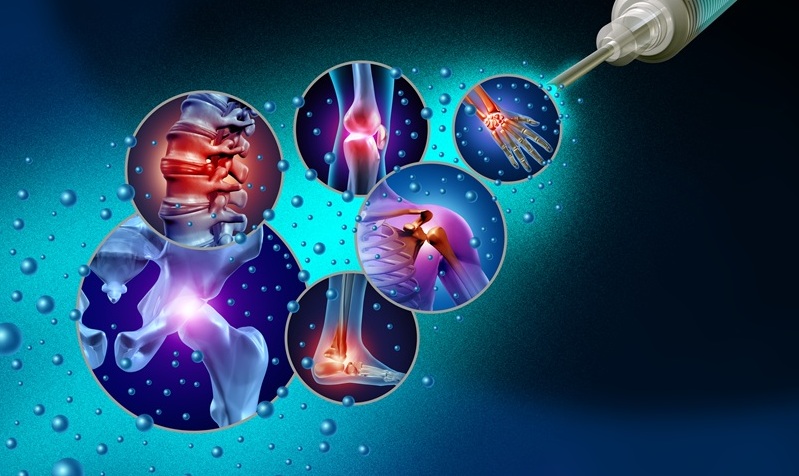
Chronic pain often comes from more than just “wear and tear.” Joints, discs, tendons, and ligaments can develop micro-tears, cartilage loss, inflammation, and impaired blood flow over time. Regenerative medicine works by delivering healing signals and supportive cells directly to these problem areas.
Targeting the Source of Pain
Instead of only acting on the nervous system or immune response, regenerative therapies aim to act at the actual tissue level. Our specialists identify the structures that appear to be driving your pain—such as a worn knee joint, a degenerated tendon, or a painful spinal joint—and, when appropriate, deliver regenerative treatments right where they are needed.
This may help:
- Support new tissue formation or remodeling
- Modulate inflammatory pathways
- Improve the local environment for healing
- Promote more durable pain relief for some patients
Platelet-Rich Plasma (PRP)
PRP is one of the most commonly used regenerative treatments in orthopedics and sports medicine.
How PRP works:
- A small amount of your blood is drawn.
- The blood is processed in a centrifuge to concentrate platelets.
- The resulting platelet-rich plasma is injected into the targeted joint, tendon, or ligament.
Platelets contain growth factors and signaling proteins that:
- Help coordinate tissue repair
- Influence inflammation in a more balanced way
May support collagen and cartilage health in certain conditions
Stem Cell–Based Therapies (High-Level Overview)
Stem cells are cells with the capacity to self-renew and to develop into various specialized cell types. In musculoskeletal medicine, stem cell–based therapies usually use adult cells (for example, from bone marrow) that are processed and injected into damaged or painful areas.
These cells may help by:
- Differentiating into supportive tissue types in specific environments
- Releasing signaling molecules that attract other healing cells
- Modulating inflammation and promoting repair processes
Because this area is still evolving, it’s important to:
- Use appropriate patient selection
- Be transparent about what is known and not yet known
- Avoid overstated promises or “miracle cure” language
At Holistiq, our focus is on conservative, medically supervised use of these therapies for carefully chosen conditions.
How Holistiq Uses Regenerative Medicine
Not all regenerative medicine clinics operate the same way. At Holistiq Spine & Orthopaedic, regenerative treatments are one part of a comprehensive, individualized plan for pain relief and improved function.
Our Approach
When you come to Holistiq, our team:
Performs a detailed evaluation, including:
- Full medical history and symptom review
- Physical examination focused on your problem areas
- Imaging, when appropriate (X-ray, MRI, or other studies)
Reviews your previous treatments, such as:
- Medications
- Physical therapy
- Prior injections or procedures
- Any surgeries you have had
Discusses all appropriate options, which may include:
- Activity modification
- Targeted physical therapy or rehabilitation
- Non-opioid medications
- Interventional pain procedures
- Regenerative treatments (PRP, stem-cell–based injections)
- Surgical referral if clearly indicated
If regenerative medicine makes sense for your condition and goals, our providers will:
- Use ultrasound or fluoroscopic guidance to precisely place injections
- Tailor the number and timing of treatments to your diagnosis
- Combine injections with rehabilitation and self-care to maximize benefits
- Monitor your progress over time and adjust your plan as needed
Our commitment is to use regenerative medicine ethically and thoughtfully—to enhance your overall care, not replace good clinical judgment or proven treatments where they are clearly needed.
Who Is a Good Candidate for Regenerative Medicine?
Regenerative medicine is not for everyone, but it can be a powerful option for the right patient.
You may be a good candidate if:
- You have chronic pain from conditions such as:
- Mild to moderate knee, hip, or shoulder osteoarthritis
- Tendon problems (tennis elbow, golfer’s elbow, rotator cuff tendinosis, patellar or Achilles tendinopathy)
- Certain ligament injuries or sprains
- Some spine-related pain conditions, depending on imaging and examination
- You have tried conservative care such as:
- Activity modification and home exercises
- Physical therapy
- Anti-inflammatory medications (as medically appropriate)
- Possibly prior cortisone or other injections
- You are hoping to:
- Delay or avoid a major surgery
- Reduce reliance on pain medications
- Stay active in work, sports, or family life
- You are generally medically stable and able to participate in a full treatment plan, including rehab.
You may not be a good candidate if:
- You have:
- Active infections
- Uncontrolled diabetes or severe cardiovascular disease
- Certain blood or clotting disorders
- Major immune system problems
- You have very advanced “bone-on-bone” arthritis where joint replacement may be a more predictable solution.
- You expect a quick, guaranteed cure without participating in rehabilitation or lifestyle changes.
Ultimately, the only way to know whether regenerative medicine is appropriate is to have a detailed, in-person evaluation. Our specialists will be honest about whether these treatments are likely to help in your case or whether a different option is safer and more effective.
What Does the Research Say?
Regenerative medicine is one of the most active areas of research in musculoskeletal care. While not every question has been answered, multiple clinical studies and trials suggest that certain patients can experience meaningful improvements.
High-Level Evidence Themes
Studies in areas such as knee osteoarthritis and chronic tendon problems have shown that:
- PRP can provide better symptom relief than placebo or some standard injections in many patients with mild to moderate arthritis.
- In chronic tendon conditions that have not responded to rest and physical therapy, regenerative injections may help reduce pain and enhance function over time.
- Benefits, when they occur, often develop over several weeks to months and can last 6–12 months or more in selected patients.
At the same time:
- Results vary from person to person.
- Some conditions respond better than others.
- Certain uses of regenerative medicine remain investigational or are still being studied in clinical trials.
We believe patients deserve:
- Clear explanations of potential benefits
- A realistic understanding of limitations
- Transparency about costs and coverage
- Ongoing follow-up to track outcomes
That is the standard we aim to uphold at Holistiq.
Regenerative Medicine FAQs
Is regenerative medicine safe?
Most regenerative procedures we use rely on your own blood or cells, which helps reduce the risk of allergic reactions. As with any injection, there are still potential risks, including:
- Temporary pain or soreness at the injection site
- Swelling or stiffness
- Bleeding or bruising
- Rare but serious complications such as infection
Our team takes careful precautions to minimize risk, uses image guidance for accuracy, and thoroughly reviews your medical history before recommending any procedure.
Is this FDA approved?
Regenerative medicine is regulated in a specific way. In general:
- Components like PRP are prepared from your own blood and used under medical supervision; they are widely used in orthopedics and pain medicine.
- Many specific applications of PRP and cell-based therapies are considered “off-label” or investigational, meaning they are not formally approved for every individual condition they are used to treat.
We follow current guidance and maintain an ethical, conservative approach. During your consultation, we clarify what is well-established, what is still emerging, and what that means for your situation.
How long does it take to see results?
Everyone is different, but typical patterns include:
- A few days of temporary soreness or increased pain after the injection
- Gradual improvement over several weeks as inflammation settles and tissue responds
- Continued changes up to several months, especially in tendon and joint conditions
Some patients may need more than one treatment, and some may not experience significant improvement. We track your progress and discuss next steps if your response is limited.
Will I still need surgery later?
Regenerative medicine is not a guarantee that you will never need surgery. However, for many patients:
- It can help delay the need for joint replacement or more invasive procedures.
- It may provide enough relief and function that surgery becomes less urgent or is avoided altogether for a period of time.
If your condition progresses or you do not respond sufficiently, we will revisit all appropriate options, including surgical referrals when clearly indicated.
Is regenerative medicine covered by insurance?
At this time, many regenerative procedures—including PRP and certain stem cell–related injections—are not covered by most insurance plans. Because of this:
- We provide transparent cost information before scheduling a procedure.
- Our team explains what is and is not covered so you can plan accordingly.
- When appropriate, we also discuss alternative treatments that may be covered by insurance.
What is recovery like?
Recovery is usually much less intense than surgery, but it still matters.
- Most procedures are performed on an outpatient basis.
- You may have soreness or stiffness for several days.
- Activity may be modified for a short period, followed by a gradual return to normal movement.
- We often recommend a structured physical therapy program to support and extend your results.
How is this different from a cortisone shot?
Cortisone (steroid) injections:
- Primarily reduce inflammation and pain
- Often provide short- to medium-term relief
- Can have downsides with repeated use, including potential tissue weakening
Regenerative treatments:
- Aim to support healing and tissue quality rather than only reducing inflammation
- Often have a slower onset but potentially longer-lasting effects for some patients
- Are typically used more sparingly and as part of a broader treatment plan
A Simple Next Step
If hip pain is limiting your movement, sleep, or quality of life, you don’t have to wait for it to “go away on its own.” A focused evaluation and personalized non‑surgical plan—built around your goals and daily activities—can often relieve pain, restore function, and help you stay active for years to come.
Where Does It Hurt? We Can Help.





Regenerative Medicine